A prescription deodorant for hyperhidrosis is really a prescription antiperspirant. In the US that usually means one of three things: an aluminium chloride solution such as Drysol, a version of aluminium chloride made up by a compounding pharmacy, or one of two FDA-approved products for underarm sweating, Qbrexza cloths and Sofdra gel, which block the nerve signal to the sweat glands instead. Many people never need any of them, because 15% aluminium chloride products are sold over the counter. In the UK the picture is simpler again: the strongest standard antiperspirants are pharmacy medicines and need no prescription.
This guide is desk research based on FDA labels, manufacturer websites, a US wholesaler shortage list and guidance from the American Academy of Dermatology (AAD), the International Hyperhidrosis Society (IHS), the NHS and NICE. Nobody at this site has used these products. It isn't medical advice and doesn't give dosing instructions: those come from your prescriber, your pharmacist and the label on your own medicine.
Disclosure: This site earns affiliate commissions from qualifying purchases. This does not affect our editorial independence or product rankings.
Prescription deodorant or prescription antiperspirant?
The AAD draws the line clearly: an antiperspirant reduces sweat, and a deodorant reduces odour. No prescription product for excessive sweating is a deodorant. A prescription for underarm sweating is for something that cuts the amount of sweat, either by plugging the sweat ducts (aluminium salts) or by blocking the chemical signal that switches the glands on (anticholinergics such as glycopyrronium and sofpironium).
So when you shop, look on the label for an antiperspirant active ingredient rather than trusting the word "clinical". Our antiperspirant vs deodorant guide covers the difference in more detail.
US prescription options at a glance
| Product | Active ingredient (as labelled) | How it works | FDA position | Supply, October 2026 |
|---|---|---|---|---|
| Drysol | Aluminium chloride hexahydrate 20% in alcohol | Plugs sweat ducts | Called an unapproved new drug in a September 2025 FDA warning letter | Supplier backorder |
| Xerac AC | Aluminium chloride (hexahydrate) 6.25% in alcohol | Plugs sweat ducts | Named in the same letter; its DailyMed listing files it as over the counter | Not on the shortage list we checked |
| Compounded aluminium chloride | Strength and base set by the prescriber | Plugs sweat ducts | Made to order by a compounding pharmacy | Depends on the pharmacy |
| Qbrexza | Glycopyrronium 2.4% on a single-use cloth | Blocks the nerve signal | FDA approved 2018 for underarm sweating, age 9 and over | Not on the shortage list we checked |
| Sofdra | Sofpironium 12.45% gel | Blocks the nerve signal | FDA approved 2024 for underarm sweating, age 9 and over | Not on the shortage list we checked |
The percentages identify each formulation. They aren't doses, and they aren't a ranking: an anticholinergic gel and an aluminium salt solution work in different ways.
Aluminium chloride: Drysol, Xerac AC and compounded versions
Drysol is the name most people know. The IHS describes 20% aluminium chloride hexahydrate in anhydrous ethanol, sold as Drysol, as available by prescription and "a commonly used agent". Two problems in autumn 2026. A US wholesaler shortage list dated 13 October 2026 shows all three Drysol packs (the 35ml and 60ml Dab-O-Matic and the 37.5ml solution) on supplier backorder, with full recovery marked "TBD".
And on 23 September 2025 the FDA sent the maker, Persōn & Covey, a warning letter stating that Drysol and Xerac AC are unapproved new drugs: not generally recognised as safe and effective for their labelled uses, with no approved application in effect. A warning letter isn't a recall. Our Drysol review covers the shortage, side effects and alternatives, and Drysol vs Certain Dri sets it against the best-known over-the-counter swap.
Xerac AC is the same company's milder solution. Its current DailyMed label lists aluminium chloride hexahydrate at 6.25% in anhydrous ethanol and files it as an over-the-counter monograph product. The AAD nonetheless lists it alongside Drysol among prescription antiperspirants, so ask your pharmacist whether they will supply it without a prescription. The AAD list also includes Hypercare; we found no current US label for it on DailyMed.
Compounded aluminium chloride is made to order by a compounding pharmacy from a prescription. The IHS clinician pages describe compounded formulations in a range of strengths, with palms and soles often needing more than underarms, and in bases other than alcohol, including gels. The AAD lists switching to a gel among the options if a liquid antiperspirant irritates your skin. Ask a dermatologist about it if Drysol is out of stock or too harsh.
Irritation is the main drawback of every aluminium chloride product. The IHS names itching and stinging soon after application as the most common effects, and warns of darkening of the skin after irritation, more often in darker skin tones. Tell your prescriber if it happens rather than pushing through.
Qbrexza and Sofdra: prescription cloths and gel for underarms
These two are FDA-approved prescription drugs, and neither is an aluminium antiperspirant. Both are anticholinergics.
Qbrexza is a single-use cloth soaked in glycopyrronium 2.4%, made by Journey Medical. Its label indicates it for primary axillary hyperhidrosis (excessive underarm sweating with no other cause) in adults and children aged 9 and over. The FDA first approved it in June 2018. More on how it works and the trial results is in our Qbrexza guide.
Sofdra is a 12.45% sofpironium gel made by Botanix, with the same indication and age range. The FDA approved it in 2024. The label warns that the gel is flammable.
Because the drug is absorbed, the side effects aren't just skin deep. Both labels list:
- Contraindications: conditions that anticholinergic effects can make worse, such as glaucoma, myasthenia gravis and severe ulcerative colitis
- Urinary retention, particularly in people with a history of it
- Heat illness, because less sweating means the body cools less well in hot conditions
- Blurred vision, so avoid driving until it clears
The most common side effects on both labels include dry mouth, blurred vision and dilated pupils, and application site reactions. The Qbrexza label adds a warning about accidental exposure, for example touching the eye area after handling a cloth. Your prescriber and the medication guide set out how to use either product.
Neither is approved for hands, feet or face. UK readers can't get either through the NHS or a UK pharmacy; see Sofdra in the UK.
How to get a prescription antiperspirant in the US
Your primary care doctor. A family doctor can prescribe an aluminium chloride solution; you don't need a specialist for that. Bring a note of what you've tried, for how long, and what happened.
A dermatologist. Worth booking if aluminium chloride has not helped after several weeks of correct use, if it irritates too much, or if you want to discuss Qbrexza, Sofdra, a compounded formula, iontophoresis or injections.
Telehealth. Both manufacturers point to online routes. The Qbrexza site links to an online consultation run by Populus, a third party that it says is not owned or operated by Journey Medical, with the prescription sent to the pharmacy you choose. The IHS says Sofdra is available anywhere in the US through a dedicated telehealth portal, with the option of shipping. Twofold, an independent service, prescribes its own 8% oxybutynin gel after an online visit. That's a different anticholinergic drug, not an aluminium antiperspirant; our Twofold review explains the service.
A telehealth prescriber still has to assess you. If your sweating is new, happens mainly at night, or started with a new medicine, see a doctor in person, because it can point to another condition. Our guide on when to see a doctor about sweating lists the warning signs.
Cost and insurance
Coverage depends on your plan and the product, so the only reliable figure is the one your pharmacist quotes. What we could source, checked on 14 October 2026:
- Qbrexza. Journey Medical's savings card advertises "as little as $0" for commercially insured, eligible patients. The terms exclude prescriptions reimbursed by Medicare, Medicaid or other federal or state programmes, and maximum reimbursement limits apply. The site gives no list price.
- Sofdra. Botanix advertises a "$0 copay with commercial insurance", for patients with plans such as employer-sponsored cover, with additional terms. The site gives no cash price.
- Twofold. Its site lists a monthly price of
$50(about £37), with a lower monthly rate on a three-month plan, and says it does not accept insurance. - Drysol. We couldn't find a current, dated cash price from a named pharmacy, and with every pack on backorder any figure could mislead. Ask your pharmacist.
- Compounded aluminium chloride. Prices are set by the compounding pharmacy. Ask for a quote before the prescription is made up.
If you're on a government plan, read the terms before counting on either copay offer.
Do you need a prescription at all?
Often not, at least to start. Several US products marketed as "prescription strength" are sold over the counter:
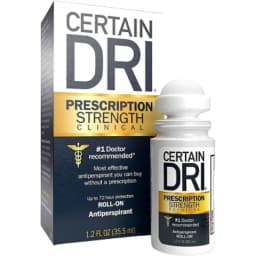
- Certain Dri Prescription Strength lists aluminium chloride 15% in a roll-on, and its maker says it gives "prescription-strength sweat protection". Certain Dri review.
- SweatBlock wipes list aluminium chloride 15% and state "NO prescription needed". SweatBlock review.
Check the formula, pack size, seller and delivery country. Search results may include alternatives.
Drugstore "clinical strength" sticks from Secret, Degree and Dove are a separate group with different formulas; see how the clinical-strength deodorants compare. The strongest antiperspirants list covers the wider field.
Is 15% enough? The AAD says non-prescription antiperspirants are only effective for mild hyperhidrosis, and that many people need a prescription version. Against that, the IHS cites a study of 691 people with underarm sweating in which 15% aluminium chloride was as effective as 20% and better tolerated. That study wasn't of any product named here, so it doesn't prove a particular brand matches Drysol.
A sensible approach is to try a 15% product exactly as its label says, and go to a doctor if it has not helped after a few weeks. For the wider differences between the two categories, see OTC vs prescription antiperspirants.
In the UK: no prescription needed for 20% aluminium chloride
UK readers don't need a US-style prescription antiperspirant. The NHS says you can buy stronger antiperspirants without a prescription.
- Anhydrol Forte is a 20% w/v aluminium chloride hexahydrate solution from Dermal Laboratories. Its product information covers sweating of the underarms, hands and feet, and the electronic medicines compendium lists it as a pharmacy medicine.
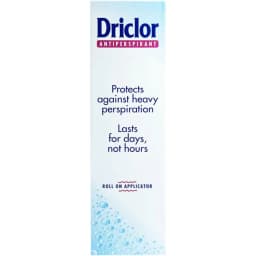
- Driclor is 20% w/w aluminium chloride hexahydrate. Medino, a UK online pharmacy, lists it as a pharmacy medicine and asks a few health questions before checkout.
- Odaban is an aluminium chloride spray that its maker sells as a cosmetic product. Its product page does not state a percentage.
A GP can also prescribe a 20% solution. The NHS says to see a GP if self-help is not working, the sweating has lasted at least six months, it stops you getting on with daily activities, it happens at night, or you take medicine for another condition. The GP can look for a cause and refer you to a dermatologist. Our NHS hyperhidrosis treatment guide walks through that pathway.
The UK prescription-only step for severe underarm sweating is a cream, not an antiperspirant. NICE technology appraisal TA1175, published on 9 July 2026, says glycopyrronium bromide cream (Axhidrox) can be used in adults with severe primary underarm sweating if lifestyle advice, topical aluminium-based antiperspirants and oral antimuscarinics have not controlled it, or are unsuitable. See Axhidrox and NICE TA1175. Qbrexza and Sofdra are US products we found no UK licence for, and Twofold is a US service. Our UK prescription treatments guide covers what a GP can actually offer.
Which route fits you?
- US, mild to moderate underarm sweating, no treatment yet: a 15% over-the-counter product used as labelled is a reasonable first step.
- US, 15% has not worked or you want a prescription now: ask your doctor about aluminium chloride, checking first whether your pharmacy can get Drysol or a compounded alternative.
- US, aluminium salts fail or irritate: a dermatologist can discuss Qbrexza, Sofdra and non-topical options. Check the copay terms against your insurance before you fill.
- UK: ask a pharmacist about Anhydrol Forte or Driclor, then see your GP if that isn't enough.
Whatever you use, see a doctor if sweating is new, mainly at night, or comes with other symptoms.