Why a supermarket antiperspirant is not enough
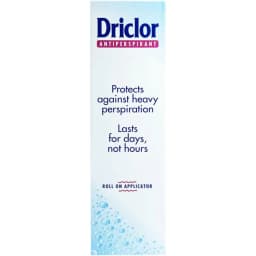
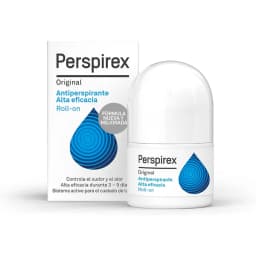
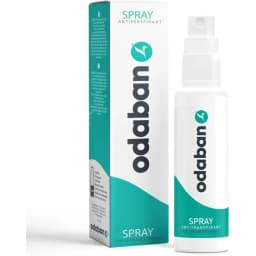
If you have hyperhidrosis, a supermarket stick is usually the wrong strength. In the UK, NICE's clinical knowledge summary starts with 20% aluminium chloride hexahydrate: Driclor, Anhydrol Forte or Odaban, sold by a pharmacist without a GP prescription. Perspirex is the gentler roll-on if a 20% product stings. US brands that publish 15% aluminium chloride are imports, and they are not stronger than those pharmacy medicines.
American pages often call 20% a prescription step. That split comes from US rules. It is not how a UK pharmacy works.
The application technique still decides whether the product does anything. Using it on damp skin in the morning is a common reason people decide antiperspirants "do not work" and move on to something more expensive.
Advertising disclosure: the buying links below may earn a commission. It does not change which product comes first.
Driclor on Amazon UK → | Anhydrol Forte at a UK pharmacy → | Odaban on Amazon UK → | Perspirex on Amazon UK →
This guide covers everything about clinical antiperspirants for hyperhidrosis: how they work at a molecular level, how to apply them for maximum effectiveness, prescription versus over-the-counter options, and how to manage the skin irritation that's their biggest drawback.
How Aluminium Chloride Works
The Mechanism
Aluminium chloride (AlCl3) reduces sweating through a physical mechanism, not a chemical one. Here's what happens:
-
Application: When you apply an aluminium chloride solution to your skin, the aluminium ions dissolve in the thin layer of moisture on the skin surface.
-
Pore entry: The aluminium ions, along with chloride and other salts, are drawn into the openings of your eccrine sweat ducts by both gravity and the concentration gradient.
-
Plug formation: Inside the sweat duct, the aluminium ions interact with mucopolysaccharides (protein-sugar complexes) lining the duct walls. This interaction causes these molecules to precipitate and form a physical plug — a gel-like obstruction that blocks the duct.
-
Sweat blockade: The plug prevents sweat from reaching the skin surface. The sweat gland below continues to produce sweat, but the sweat either backs up (causing mild pressure that further suppresses production) or is reabsorbed.
-
Gradual resolution: Over several days, the natural turnover of skin cells dislodges the plug, and sweating returns. This is why regular reapplication is necessary.
Why Night Application Is Critical
Here's the most important piece of advice in this entire article: apply clinical antiperspirant at night, to completely dry skin, before bed.
This isn't a suggestion — it's the difference between the product working and not working. Here's why:
- Sweat ducts must be dry for the aluminium ions to penetrate and form effective plugs. If there's active sweating, the aluminium gets washed away before it can work.
- Sweating is minimal during sleep (for most people, including those with hyperhidrosis), creating the ideal window for application.
- The plugs need 6-8 hours to fully form. Overnight application provides this time.
- Morning application is far less effective because sweat production increases with activity, diluting and flushing out the aluminium before plugs can form.
Product leaflets specify night-time application to dry skin for this reason. If you have been applying antiperspirant in the morning after showering and wondered why it does not work, that is the first thing to change.
Product Categories: OTC vs. Prescription
US over-the-counter clinical strength (about 10-15% aluminium chloride)
In the United States, products in this band are the step up from a supermarket stick, and they sit below what US prescribers call a prescription antiperspirant. In the UK they are not the first step. A 20% pharmacy medicine is already available without that prescription. The table is here so a US label makes sense if you already own one of these imports.
Common OTC clinical antiperspirants:
| Product | Active Ingredient | Concentration |
|---|---|---|
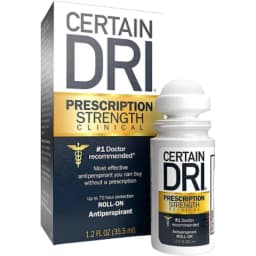
| Certain Dri Prescription Strength | Aluminium chloride | 15% |
| Dove Clinical Protection | Aluminium zirconium tetrachlorohydrex gly | 20% (different salt) |
| Secret Clinical Strength | Aluminium zirconium trichlorohydrex gly | 20% (different salt) |
| Degree Clinical Protection | Aluminium zirconium tetrachlorohydrex gly | 20% (different salt) |
| SweatBlock Wipes | Aluminium chloride | 15% |
| ZeroSweat Original | Aluminium chloride | 15% |
| Carpe Hand & Foot | Aluminium sesquichlorohydrate | 15% (different salt) |
Important note: "20% aluminium zirconium" is NOT the same as "20% aluminium chloride." Aluminium zirconium compounds are less potent and less irritating than aluminium chloride. When comparing concentrations, compare apples to apples.
Is a Given Percentage Strong Enough?
This is the question the labels are worst at answering, so here is the rule that actually matters: the salt sets the ceiling, and the percentage only compares products using the same salt.
Ranked by strength, the aluminium salts you will meet are:
- Aluminium chloride hexahydrate, the strongest. UK pharmacy medicines such as Anhydrol Forte and Driclor use it at 20%, and it is what US prescriptions contain.
- Aluminium chloride, used at 15% by the strongest widely sold over-the-counter products.
- Aluminium sesquichlorohydrate, a milder salt. Carpe publishes 15% of it, which is why the product is comfortable on palms and also why it is often not enough for diagnosed hyperhidrosis.
- Aluminium zirconium compounds, milder again, and what most supermarket "clinical" antiperspirants use even when the number on the box is 20%.
So a sesquichlorohydrate product at 15%, or at 17.6%, or at any figure you see quoted, is not comparable to 15% aluminium chloride and is nowhere near 20% aluminium chloride hexahydrate. If a sesquichlorohydrate product has not controlled your sweating, the useful next step is changing salt rather than hunting a higher percentage of the same one.
Certain Dri's own marketing makes this point, noting that other antiperspirants may advertise aluminium compounds at higher percentages without those being equivalent. That is accurate, and it is the single most useful thing to understand before spending money in this category.
"Prescription Strength" on a Box Does Not Mean Prescription
Worth knowing before you pay for a consultation you do not need. "Prescription strength" is a marketing phrase, not a legal category. Certain Dri Prescription Strength is sold over the counter. So are SweatBlock and ZeroSweat.
In the UK the distinction that matters is different again. Anhydrol Forte and Driclor are licensed P medicines, which are genuinely stronger at 20% aluminium chloride hexahydrate, and a pharmacist can still sell them without a prescription. Online pharmacies ask you to complete a short health questionnaire, which a pharmacist reviews. Some prescriber sites route the same products through a paid consultation instead, which is their commercial model rather than a legal requirement.
So the honest answer to whether prescription strength is much better: the products actually requiring a prescription are stronger, and the products merely labelled "prescription strength" are not.
We have assessed the leading OTC options — read our Certain Dri review for the budget 15% roll-on and our SweatBlock review for the convenient 15% wipes. For a full comparison with our recommendations, see our guide to the best antiperspirants for hyperhidrosis, or the strongest antiperspirants if you need maximum 15% strength.
Prescription Strength (15-25% Aluminium Chloride)
When OTC products aren't cutting it, prescription aluminium chloride hexahydrate is the next step. The higher concentration provides more effective sweat duct plugging.
Common prescription antiperspirants:
| Product | Active Ingredient | Concentration | Form |
|---|---|---|---|
| Drysol | Aluminium chloride hexahydrate | 20% | Solution |
| Xerac AC | Aluminium chloride hexahydrate | 6.25% | Solution |
| Hypercare | Aluminium chloride hexahydrate | 20% | Solution |
| Custom compounded | Aluminium chloride hexahydrate | Up to 25% | Varies |
Drysol is the US prescription version: 20% aluminium chloride hexahydrate in anhydrous alcohol, which the International Hyperhidrosis Society describes as the formula most often prescribed. It is not marketed in the UK, and in autumn 2026 all three US packs were on supplier backorder.
UK readers have an easier route: 20% aluminium chloride hexahydrate is sold here as a pharmacy medicine — no prescription needed. Driclor is the classic brand, Anhydrol Forte is the identical strength at roughly a third of the price (and since June 2026 the NHS reference product for generic prescriptions), and Odaban offers 20% in a spray. See our Driclor vs Perspirex comparison for how the UK options stack up.
Effectiveness Rates
Research published in the Journal of the American Academy of Dermatology provides these effectiveness rates:
- OTC clinical antiperspirants (aluminium zirconium): a small reduction in sweating
- 12% aluminium chloride: a modest reduction in sweating
- 20% aluminium chloride (Drysol): a modest reduction in sweating
- 25% aluminium chloride (compounded): a moderate reduction in sweating
These numbers may sound modest compared to treatments like Botox (see sources) or iontophoresis (see sources), but clinical antiperspirants have the advantage of being easily accessible, affordable, and requiring no medical procedures.
Step-by-Step Application Guide
Before the written steps, this short explainer from board-certified dermatologist Dr Sam Ellis covers why clinical antiperspirants are the first-line treatment and how to get the application right:
Getting the most out of clinical antiperspirants requires precise technique. Follow these steps:
Evening Application (Primary)
-
Shower in the evening and thoroughly dry the treatment area. Wait at least 30-60 minutes after showering — your skin needs to be completely, absolutely dry. No residual moisture.
-
Use a hair dryer on cool setting to ensure the skin is bone-dry. This extra step can significantly improve results, especially for underarms.
-
Apply a thin, even layer of the product to the entire sweating area. For underarms, use 2-3 swipes or a thin coating. More is not better — excess product causes irritation without improving effectiveness.
-
Let it dry completely before putting on a shirt or getting into bed. This takes 3-5 minutes.
-
Do not apply to freshly shaved skin. Wait at least 24-48 hours after shaving before applying aluminium chloride to avoid severe irritation.
-
Go to sleep. The product works while you sleep.
Morning Routine
-
Shower in the morning as usual. You can wash off the product — the plugs have already formed in your sweat ducts overnight.
-
Apply regular deodorant (for odour control) in the morning if desired. You can also apply a standard (non-clinical) antiperspirant for added protection.
Frequency
- Initial phase (Week 1-2): Apply every night until sweating is controlled. Most people see noticeable improvement within 3-7 days.
- Maintenance phase: Once sweating is controlled, reduce frequency to every other night, then every third night, until you find the minimum frequency that maintains dryness. Many people can maintain results with 2-3 applications per week.
Managing Skin Irritation
Irritation is the most significant drawback of aluminium chloride antiperspirants and the primary reason people discontinue use. Understanding the causes and prevention strategies is essential.
Why Irritation Happens
Aluminium chloride is acidic (pH 2-3) and reactive. When it contacts moisture on the skin, it forms hydrochloric acid as a byproduct, causing:
- Stinging and burning upon application
- Redness (erythema)
- Itching
- Dryness and flaking
- In severe cases, contact dermatitis
Prevention Strategies
1. Apply only to bone-dry skin — This is the single most important factor. Moisture + aluminium chloride = hydrochloric acid = irritation. Use a hair dryer on cool setting to ensure dryness.
2. Use a hydrocortisone cream — Apply a thin layer of 1% hydrocortisone cream (OTC) to the area in the morning after washing off the antiperspirant. This prevents and treats inflammation. Can be used daily during the initial phase.
3. Apply baking soda paste in the morning — A paste of baking soda and water applied for a few minutes in the morning can neutralize residual acid and reduce irritation.
4. Don't overapply — A thin layer is sufficient. Excess product increases irritation without improving effectiveness.
5. Don't shave immediately before application — Wait 24-48 hours after shaving or waxing.
6. Skip the plastic wrap — Some older guides recommend covering the application area with plastic wrap overnight. This increases penetration but also dramatically increases irritation. Skip it unless specifically directed by your dermatologist.
7. Reduce frequency when possible — Once sweating is controlled, use the product less often. Many people can maintain results with 2-3 applications per week.
8. Try salicylic acid peel preparation — Some dermatologists recommend applying a 2% salicylic acid solution before the antiperspirant to improve penetration and reduce the required concentration.
If Irritation Becomes Intolerable
If you can't tolerate aluminium chloride despite proper technique:
- Switch to a lower concentration (try 12% before giving up on 20%)
- Try an aluminium zirconium product (less effective but much less irritating)
- Consider switching to Qbrexza (glycopyrronium) wipes, which work through a completely different mechanism and don't cause the same irritation
- Discuss iontophoresis or Botox with your dermatologist
Application for Different Body Areas
Underarms
The most straightforward application area. Apply to the entire hair-bearing area and slightly beyond. Avoid applying immediately after shaving.
Hands (Palmar)
Palmar application is trickier because hands are used constantly and the product transfers off:
- Apply at night and wear thin cotton gloves while sleeping
- Product tends to be less effective for palmar hyperhidrosis than for axillary
- Iontophoresis is generally more effective for hands — see our Dermadry review
Feet (Plantar)
Similar challenges as hands:
- Apply at night and wear thin cotton socks to bed
- Ensure feet are thoroughly dry first (between toes too)
- Consider combining with a foot powder during the day
- Iontophoresis is also more effective than antiperspirants for plantar hyperhidrosis
Face and Scalp
Use with extreme caution on the face:
- Use a lower concentration (6.25-12%)
- Apply with a cotton swab to avoid getting product in eyes
- Test a small area first
- Avoid hairline area (can cause hair breakage)
- Qbrexza wipes may be a better facial option
Groin and Other Sensitive Areas
- Use the lowest effective concentration
- Apply to completely dry skin only
- Expect more irritation in skin folds
- Consider alternating with a gentle antiperspirant on sensitive days
Cost Analysis
OTC Products
| Product | Approximate Cost | Duration |
|---|---|---|
| Certain Dri (1.2 oz roll-on) | Check current price | 4-8 weeks |
| SweatBlock Wipes (10-pack) | $15-$20 (about £11.16–14.87) | 10 weeks |
| Dove Clinical Protection | $8-$12 (about £5.95–8.92) | 4-6 weeks |
Annual cost: $50-$200 (about £37–149) depending on product and usage frequency
Prescription Products
| Product | Approximate Cost | Duration |
|---|---|---|
| Drysol (US, prescription) | Ask your pharmacist: on supplier backorder in autumn 2026 | Varies |
| Generic aluminium chloride 20% | $15-$40 (about £11–30) (compounding pharmacy) | 2-4 months |
Annual cost: $60-$400 (about £45–297) depending on product and insurance
Compared to Other Treatments
Clinical antiperspirants are by far the most affordable hyperhidrosis treatment — often by an order of magnitude:
| Treatment | Annual Cost |
|---|---|
| Clinical antiperspirants | $50-$400 (about £37–297) |
| Prescription medications | $120-$1,200 (about £89–892) |
| Iontophoresis (device) | $400-$1,100 (about £297–818) (one-time) |
| Botox | $1,500-$3,000 (about £1,116–2,231) |
| miraDry | $2,000-$3,000 (about £1,487–2,231) (one-time) |
The Aluminium Safety Question
Is Aluminium in Antiperspirants Safe?
This is one of the most common questions about antiperspirant use, fueled by decades of internet claims linking aluminium to breast cancer and Alzheimer's disease. Here's what the evidence actually says:
Breast cancer: Multiple large-scale epidemiological studies, including a comprehensive review by the National Cancer Institute, have found no consistent evidence linking antiperspirant use to breast cancer risk. The American Cancer Society's position is that current evidence does not support a link.
Alzheimer's disease: The aluminium-Alzheimer's hypothesis was proposed in the 1960s based on elevated aluminium levels found in the brains of some Alzheimer's patients. However, subsequent research has largely failed to support a causal relationship. The Alzheimer's Association states that "studies have failed to confirm any role for aluminium in causing Alzheimer's."
Kidney concerns: People with significantly impaired kidney function may not clear aluminium as efficiently. US antiperspirant labels carry an FDA warning telling people with kidney disease to ask a doctor before use. If that applies to you in the UK, ask a pharmacist or GP before using a strong aluminium product. For people with normal kidney function, absorption from antiperspirant use is small.
Bottom line: Cancer Research UK states plainly that using deodorants and antiperspirants does not increase cancer risk, and that the best studies show no link between aluminium, deodorants and breast cancer. The same position is taken by the American Cancer Society, and the Alzheimer's Association. People who want to avoid aluminium should speak to a GP. Iontophoresis is one option that is used in the UK. Qbrexza is not licensed here.
When to Move Beyond Antiperspirants
Clinical antiperspirants are a great starting point, but they have limitations. Consider stepping up to another treatment if:
- You've applied correctly for 4+ weeks (nighttime, dry skin) with minimal improvement
- Skin irritation prevents consistent use despite following prevention strategies
- Your sweating is too severe — if you're dripping, a topical plug simply can't keep up
- You need treatment for hands or feet — antiperspirants are least effective in these areas
In the UK the next steps are a GP, not a US prescription wipe:
- NHS treatment guide — what a GP can prescribe, and what is funded locally
- Iontophoresis — the usual next option for hands and feet
- Botox injections — sometimes funded for severe underarms
- Qbrexza — a US cloth. It is not licensed in the UK, so it is not the prescription to ask for
- Oral medications — for multi-area sweating
- miraDry — private underarm procedure, not an NHS treatment
See our complete guide to hyperhidrosis for the full treatment algorithm.
Frequently Asked Questions
Why do I need to apply antiperspirant at night?
Your sweat glands are least active during sleep, which allows the aluminium chloride to enter the sweat ducts and form plugs without being washed out by active sweating. The plugs need 6-8 hours to fully form. Morning application is significantly less effective because your sweat ducts are already active, preventing proper plug formation.
Can I use clinical antiperspirant on my hands and feet?
Yes, but effectiveness is lower for hands and feet compared to underarms. Apply at night and wear cotton gloves or socks to hold the product in place. For palmar and plantar hyperhidrosis, iontophoresis is generally more effective and worth considering.
What's the difference between antiperspirant and deodorant?
Antiperspirant reduces sweat production by blocking sweat ducts with aluminium salts. Deodorant masks or prevents odour using antimicrobial agents and fragrances but does not reduce sweating. Many commercial products combine both functions.
How long does it take for clinical antiperspirant to work?
Most people notice improvement within 3-7 days of consistent nighttime application. Maximum effectiveness is typically reached within 2-4 weeks. If you're not seeing results after 4 weeks of proper application, you may need a higher concentration or a different treatment approach.
Can clinical antiperspirants permanently reduce sweating?
No. Clinical antiperspirants provide temporary sweat reduction that requires ongoing application. The aluminium plugs are naturally expelled as skin cells turn over (every 2-4 days). However, some patients report needing less frequent application over time, suggesting possible long-term sweat duct remodeling.
Will clinical antiperspirant stain my clothes?
Aluminium chloride can leave yellowish stains on light-coloured fabrics, particularly when combined with sweat. To minimise staining: let the product dry completely before dressing, apply a thin layer (less is more), and consider wearing a thin undershirt as a barrier. Washing clothes promptly after wear helps prevent set-in stains.
Is it safe to use prescription antiperspirant every day?
Yes, daily use is safe for most people. However, daily application of high-concentration aluminium chloride often isn't necessary — most people can maintain sweat reduction with 2-3 applications per week after the initial daily phase. Less frequent application also reduces skin irritation.
Can I use clinical antiperspirant while pregnant?
OTC antiperspirants are generally considered safe during pregnancy. For prescription-strength aluminium chloride, consult your OB-GYN. The systemic absorption of aluminium from topical application is very low, but discussing any medication use during pregnancy with your doctor is always advisable.
Sources
- Hölzle E, Braun-Falco O. "Structural changes in axillary eccrine glands following long-term treatment with aluminium chloride hexahydrate solution." British Journal of Dermatology. 1984;110(4):399-403.
- Benohanian A. "Antiperspirants and deodorants." Clinics in Dermatology. 2001;19(4):398-405.
- Grabell DA, Hebert AA. "Current and emerging medical therapies for primary hyperhidrosis." Dermatology and Therapy. 2017;7(1):25-36.
- Milanesi N, et al. "Aluminium chloride hexahydrate for the treatment of primary hyperhidrosis." Giornale Italiano di Dermatologia e Venereologia. 2019;154(1):86-91.
- National Cancer Institute. "Antiperspirants/Deodorants and Breast Cancer." www.cancer.gov. Accessed March 2026.
- Alzheimer's Association. "Myths about Alzheimer's disease." www.alz.org. Accessed March 2026.
- International Hyperhidrosis Society. "Antiperspirants." www.sweathelp.org. Accessed March 2026.
Getting this treated in the UK
What the NHS will fund, what needs a referral and what you will have to pay for privately varies by area. Our guide to hyperhidrosis treatment on the NHS walks through the route from GP appointment to dermatology referral.