Why Feet Can Be Cold and Sweaty at the Same Time
Cold sweaty feet sound like a contradiction. Sweating is supposed to happen when you are hot — so how can your feet be clammy and freezing at once? If you have peeled off damp socks at the end of the day to find your toes icy to the touch, you are not imagining it, and you are far from alone.
The short answer: sweat cools you down. That is its entire job. When sweat evaporates from your skin, it draws heat away with it. Your feet spend the day sealed inside socks and shoes, so the sweat never fully evaporates — it just keeps wicking heat out of your skin while your soles sit in a damp, chilled environment. Constant moisture means constant cooling, whether you want it or not.
There is a second mechanism working against you at the same time: circulation. The soles of your feet are packed with sweat glands controlled by the sympathetic nervous system — the same system that runs your stress response. When it fires (from stress, anxiety, caffeine, or simply the overactive nerve signalling behind primary hyperhidrosis), it does two things simultaneously:
- Activates the sweat glands in your soles and palms
- Constricts the small blood vessels in your extremities, redirecting warm blood towards your core and major muscles
So the very trigger that makes your feet sweat also reduces the warm blood flow that would keep them comfortable. Damp skin plus restricted circulation equals feet that are simultaneously wet and cold — the classic "cold and clammy" feeling.
This is also why cold sweaty feet are so strongly linked with nerves and stress. If your feet turn into ice blocks before a presentation or a difficult conversation, that is a normal (if unwelcome) sympathetic response. Our guide on hyperhidrosis and anxiety covers the sweat–stress loop in more depth.
Is It Hyperhidrosis?
For most people with persistently cold, sweaty feet, the underlying issue is plantar hyperhidrosis — excessive sweating of the soles that happens regardless of temperature. Telltale signs include:
- Feet that sweat even in winter, or while sitting still in a cool room
- Both feet affected roughly equally
- Sweating that started in childhood or your teens
- Sweaty hands as well (palmar and plantar hyperhidrosis often travel together)
- Family members with the same problem
If that sounds like you, the cold sensation is essentially a side effect: your feet are being evaporatively cooled all day long. The fix is to reduce the sweating itself, which we cover below — and there is a full toolkit in our guide to sweaty feet remedies.
When Cold Sweaty Feet Are Harmless — and When to See a GP
Most of the time, cold sweaty feet are uncomfortable but benign. Persistent sweating with a normal skin colour, in both feet, in someone who has always run sweaty, is very unlikely to signal anything sinister.
However, a few patterns deserve a proper look from your GP, because cold feet and sweating changes can occasionally point to something else:
Raynaud's phenomenon
If your toes go through distinct colour changes — typically white, then blue, then red as blood flow returns — in response to cold or stress, that suggests Raynaud's rather than simple hyperhidrosis. The NHS notes Raynaud's is common and usually manageable, but new or severe cases should be assessed, particularly if they start in adulthood or affect one side only.
Thyroid problems
An overactive thyroid can increase sweating overall, while an underactive thyroid commonly causes cold intolerance and cold extremities. If your cold sweaty feet arrived alongside weight changes, fatigue, heart palpitations or feeling unusually hot or cold all over, a simple blood test can check your thyroid function.
Peripheral neuropathy and diabetes
Nerve damage in the feet — most commonly from diabetes — can disrupt both temperature regulation and sweating, and sometimes causes cold sensations, numbness, tingling or burning. Red flags include:
- Numbness, pins and needles, or burning pain in the feet
- Sweating changes in the feet alongside altered sensation
- Cuts or blisters on the feet that are slow to heal
- Known diabetes, or symptoms such as excessive thirst and frequent urination
Any combination of these warrants a GP appointment. Foot symptoms in people with diabetes should never be left to wait.
Other reasons to book an appointment
- Sweating that began suddenly in adulthood with no family history
- Sweating affecting one foot only
- Night sweats, fever, or unexplained weight loss alongside the foot symptoms
- Skin colour changes, ulcers, or wounds that will not heal
For a fuller run-through of red flags and what a GP appointment actually involves, see our guide on when to see a doctor about sweating.
How to Manage Cold Sweaty Feet Day to Day
Once anything medical has been ruled out (or if your pattern clearly fits lifelong plantar hyperhidrosis), management comes down to two goals: reduce the sweat, and stop the sweat that does happen from chilling you.
Get the right socks
This is the single highest-impact change for most people. Pure cotton socks absorb sweat, hold it against your skin, and stay cold and soggy for hours — the worst possible material for this problem. Instead:
- Merino wool insulates even when damp and wicks moisture away from the skin, which directly tackles the evaporative chill
- Technical synthetic blends (the kind sold for running and hiking) move sweat away fast and dry quickly
- Change socks midday if your sweating is heavy — a fresh, dry pair at lunchtime transforms the afternoon
We compare the leading options in our round-up of the best sweat-proof socks.
Rotate your shoes
Shoes need at least 24 hours to dry out fully. Wearing the same damp pair two days running means starting every morning in a cold, moist environment. Keep two or three pairs in rotation, remove insoles overnight to speed drying, and favour leather or mesh over non-breathable synthetics.
Use a foot antiperspirant
Antiperspirants are not just for underarms. Applied to clean, dry soles at night, aluminium-based antiperspirant lotions and sprays plug the sweat ducts and cut output where it starts — less sweat means less evaporative cooling. Stronger formulations are available if standard products fall short; our guide to the best products for sweaty feet compares the options worth trying first. (Some links on this site are affiliate links — see our disclaimer for details.)
Warm from the inside
Because cold sweaty feet are partly a circulation story, anything that promotes blood flow helps: regular movement rather than sitting still for hours, avoiding tight shoes that compress the foot, and cutting back on caffeine and nicotine, both of which constrict the small blood vessels in your extremities.
Manage the stress trigger
If your feet go cold and damp in stressful situations, addressing the trigger helps as much as any product. Slow breathing before high-pressure moments, regular exercise, and — where anxiety is a running theme — talking therapies can all dampen the sympathetic overdrive that drives both the sweating and the vessel constriction.
Iontophoresis for Severe Cases
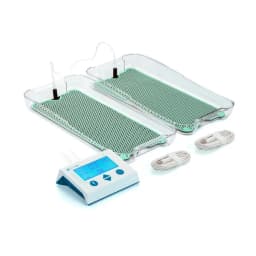
If socks, shoe rotation and antiperspirants are not enough, iontophoresis is widely regarded as the most effective non-invasive treatment for plantar hyperhidrosis. You place your feet in shallow trays of water while a device passes a mild electrical current through it, temporarily switching off the sweat glands. Studies consistently report success rates of 80–90% for feet.
Home devices make the treatment practical long term: sessions of 20–40 minutes, daily at first, tapering to once or twice a week for maintenance. It is a genuine commitment, but for severe plantar sweating it is often the treatment that finally works. Read our full guide to iontophoresis for how it works, what devices cost, and what to expect from a treatment course.
For sweating that resists everything above, a GP or dermatologist can discuss prescription options, including anticholinergic medication and Botox injections — though injections into the soles are notoriously uncomfortable and usually a last resort.
The Bottom Line
Cold sweaty feet are usually two normal processes stacking up: overactive sweat glands soaking your skin, and evaporation plus stress-driven vessel constriction pulling the heat out. In most people it is plantar hyperhidrosis doing exactly what plantar hyperhidrosis does — annoying, but harmless and very treatable. Fix the moisture with wicking socks, shoe rotation and a foot antiperspirant; escalate to iontophoresis if you need to; and see your GP if you notice colour changes, numbness, one-sided symptoms, or sweating that appeared suddenly in adulthood.