Why You Sweat So Much Through Your Back
If you have ever stood up from a chair to reveal a damp outline on the seat back, or avoided light-coloured shirts because wet patches appear within minutes, you are not alone. Back sweating solutions are among the most searched topics in the hyperhidrosis community because the back is one of the largest and most difficult-to-treat sweat zones on the body.
The back — particularly the upper back between the shoulder blades and the lower lumbar region — contains a dense network of eccrine sweat glands. In people with truncal hyperhidrosis, these glands produce sweat far beyond what is needed for temperature regulation. The result is visible wetness, stained clothing, skin irritation, and significant social discomfort. Many people with truncal hyperhidrosis also deal with chest sweating or neck sweating, which share many of the same causes and treatments.
What Causes Excessive Back Sweating?
Primary Truncal Hyperhidrosis
Primary hyperhidrosis affecting the trunk (back, chest, and abdomen) is less commonly discussed than palmar or axillary hyperhidrosis, but it is far from rare. Research published in the Archives of Dermatological Research suggests that truncal sweating affects up to 30% of all hyperhidrosis patients, though many never seek treatment because they assume nothing can be done.
Primary truncal hyperhidrosis typically:
- Begins during adolescence or young adulthood
- Occurs symmetrically on both sides of the back
- Is absent during sleep
- May run in families
- Worsens with heat, stress, and physical activity
Secondary Causes
Back sweating can also be a symptom of an underlying condition:
- Obesity: Increased body mass generates more heat, and excess skin folds trap moisture
- Hormonal fluctuations: Menopause, andropause, and thyroid dysfunction can all increase truncal sweating
- Medications: Antidepressants, blood pressure medications, and hormonal therapies are common culprits
- Infections and febrile illness: Fever naturally increases whole-body sweating
- Autonomic dysfunction: Conditions affecting the autonomic nervous system can disrupt normal sweat regulation
- Compensatory sweating: Patients who have had endoscopic thoracic sympathectomy (ETS) for palmar or axillary hyperhidrosis frequently develop heavy compensatory sweating on the back and trunk
Clinical Antiperspirants for Back Sweating
Topical antiperspirants are the most accessible first-line treatment for back sweating, though applying them to such a large area requires some strategy.
Choosing the Right Product
For back application, look for:
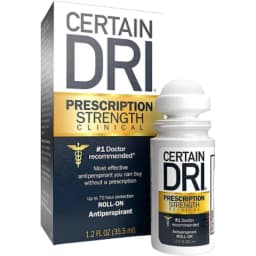
- Aluminium chloride hexahydrate at 10-15% concentration for initial use, stepping up to 20% if tolerated
- Roll-on or spray formulations for easier application to hard-to-reach areas
- Fragrance-free formulas to minimise irritation on sensitive trunk skin
Visit our comprehensive guide to the best antiperspirants for specific product recommendations and comparisons.
How to Apply Antiperspirant to Your Back
- Shower and dry your back completely — moisture reduces effectiveness and increases irritation
- Apply at bedtime when sweat glands are least active
- Use a back applicator tool (a lotion applicator with a long handle works well) to reach your mid and upper back
- Start with every-other-night application for the first two weeks
- Once tolerance is established, apply nightly for 1-2 weeks, then reduce to 2-3 nights per week for maintenance
Managing Irritation
The back skin can be surprisingly sensitive to aluminium chloride. If you experience stinging, redness, or itching:
- Reduce the concentration or frequency of application
- Apply a thin layer of hydrocortisone cream in the morning
- Ensure skin is completely dry before application — even trace moisture increases irritation
- Try switching to a glycopyrrolate-based topical, which may be gentler
Clothing Strategies for Back Sweat
The right clothing choices can dramatically reduce the visibility and discomfort of back sweating.
Sweat-Proof Undershirts
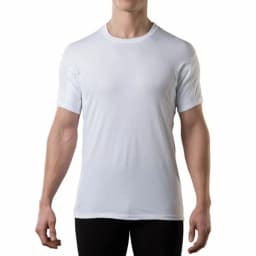
Wearing a sweat-proof undershirt is one of the most effective and immediate back sweating solutions available. These garments feature built-in sweat barriers that prevent moisture from reaching your outer layer.
Products like the Thompson Tee use patented Hydro-Shield technology that absorbs and traps sweat in a waterproof barrier. While originally designed for underarm sweat, the full-body moisture-wicking fabric also helps manage back perspiration. Read our detailed Thompson Tee review for a thorough evaluation.
Check out our full guide to the best sweat-proof undershirts for additional options.
Fabric Selection
- Best fabrics: Merino wool, bamboo, and performance polyester blends that wick moisture away from skin
- Worst fabrics: Cotton (absorbs and holds moisture, creating visible wet patches), silk (shows water marks), linen (wrinkles and stains easily)
- Colours: Dark colours, heather patterns, and prints hide sweat marks better than solid light colours
Layering Strategy
Wearing an undershirt beneath your outer layer creates a buffer zone. The undershirt absorbs sweat, while the outer layer stays dry and presentable. This is especially effective for professional settings where removing your outer layer is not an option.
Medical Treatments for Severe Back Sweating
When antiperspirants and clothing strategies are not enough, several medical treatments can help.
Oral Medications
Systemic anticholinergic medications are often the treatment of choice for truncal hyperhidrosis because the affected area is too large for practical topical treatment or Botox injection.
- Glycopyrrolate: 1-2 mg taken two to three times daily. The most commonly prescribed option with a good efficacy-to-side-effect ratio
- Oxybutynin: 2.5-5 mg twice daily. A large study found that 73% of truncal hyperhidrosis patients reported improvement
- Propantheline: Less commonly prescribed but another anticholinergic option
Side effects of anticholinergics include dry mouth, constipation, blurred vision, and urinary retention. These medications are generally not recommended for older adults due to cognitive side effects.
Botox Injections
Botox can be used for back sweating, but the large surface area involved makes it less practical than for smaller zones like the underarms or forehead. A single back treatment may require 200-400 units of Botox (compared to 50-100 units for both underarms), significantly increasing cost. However, for localized patches of intense sweating — such as just between the shoulder blades — targeted Botox can be very effective.
Prescription Topical Wipes
Glycopyrronium-based medicated wipes (Qbrexza) can be applied to the back, though coverage of the entire area may require multiple wipes per application. Some dermatologists prescribe compounded glycopyrrolate in a spray formulation for easier back application.
Lifestyle Modifications
Stay Cool
- Use a desk fan or cooling vest during sedentary work
- Carry a small towel or cooling cloth during warmer months
- Take cool showers before events where sweating would be problematic
- Keep car seats ventilated — mesh seat covers and ventilated car seats prevent the trapped-heat effect
Exercise Smart
- Exercise in climate-controlled environments
- Wear moisture-wicking athletic clothing
- Bring a change of clothes for post-workout
- Consider morning workouts to avoid the hottest part of the day
Manage Stress
Stress is a powerful trigger for truncal sweating. Techniques that reduce baseline sympathetic nervous system activation include:
- Regular cardiovascular exercise (paradoxically reduces resting sweat rates)
- Progressive muscle relaxation
- Mindfulness meditation
- Cognitive behavioural therapy, especially if sweating causes anxiety that triggers more sweating
When to See a Doctor About Back Sweating
Schedule an appointment with a dermatologist or your primary care provider if:
- Back sweating significantly impacts your quality of life, clothing choices, or social activities
- Sweating occurs primarily at night and soaks your sheets
- The onset was sudden or has recently worsened
- You notice sweating on only one side of your back (asymmetric sweating can indicate nerve issues)
- Over-the-counter antiperspirants have not helped after 4-6 weeks of consistent use
- You experience accompanying symptoms like weight loss, fever, or heart palpitations
Sources
- Grabell DA, Hebert AA. "Current and emerging medical therapies for primary hyperhidrosis." Dermatology and Therapy. 2017;7(1):25-36.
- Wolosker N, et al. "The use of oxybutynin for treating facial and axillary hyperhidrosis." Annals of Vascular Surgery. 2011;25(8):1158-1164.
- Nawrocki S, Cha J. "The etiology, diagnosis, and management of hyperhidrosis: A comprehensive review." Journal of the American Academy of Dermatology. 2019;81(3):657-666.
- International Hyperhidrosis Society. "Truncal Hyperhidrosis." SweatHelp.org.
- Strutton DR, et al. "US prevalence of hyperhidrosis and impact on individuals with axillary hyperhidrosis." Journal of the American Academy of Dermatology. 2004;51(2):241-248.