Why Your Feet Won't Stop Sweating
Sweaty feet are one of the most uncomfortable — and least discussed — symptoms of hyperhidrosis. Your feet contain more sweat glands per square inch than any other part of your body (roughly 250,000 between both feet), so when those glands go into overdrive, the results are hard to ignore. Soggy socks, shoes that never dry out, blisters from moisture, and the constant worry about foot odour make plantar hyperhidrosis genuinely miserable.
If you are looking for sweaty feet remedies that actually work, this guide covers everything from quick daily fixes to medical treatments, so you can find the right solution for your situation.
Understanding Plantar Hyperhidrosis
Plantar hyperhidrosis is excessive sweating of the feet that goes beyond what is needed for temperature regulation. It is a form of primary focal hyperhidrosis, meaning it is not caused by another medical condition and affects a specific area of the body.
Common characteristics include:
- Sweating that occurs regardless of temperature or activity level
- Both feet affected equally (asymmetric sweating may suggest a different cause)
- Onset typically in childhood or adolescence
- Often co-occurs with palmar hyperhidrosis (sweaty hands) — if you have both, see our guide to sweaty hands and feet
- Family history in many cases
Hyperhidrosis affects around 1% of the UK population, and the feet are one of the most commonly affected areas after the underarms and hands.
Everyday Sweaty Feet Remedies
Foot Powders and Sprays
Absorbent powders are a first line of defense for mild to moderate foot sweating.
- Talc-free foot powders — Look for powders containing cornstarch, kaolin clay, or baking soda. These absorb moisture effectively without the concerns associated with talc.
- Medicated foot powders — Products containing menthol or zinc oxide provide absorption plus antibacterial properties that help control odour.
- Antiperspirant foot sprays — Aerosol antiperspirants containing aluminium chlorohydrate can be sprayed directly on the soles. Apply to clean, dry feet before bed for best results.
Antiperspirant Lotions
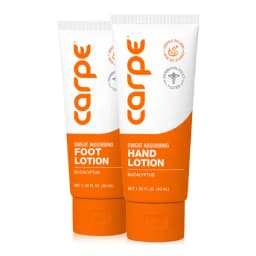
Antiperspirant lotions formulated for feet work similarly to hand antiperspirants. Products containing aluminium salts temporarily plug sweat ducts and reduce output. Apply to clean, dry soles at night and allow to absorb before putting on socks. For product recommendations, check out our guide to the best antiperspirants for hyperhidrosis.
Choosing the Right Socks
Your sock choice has an enormous impact on how your feet feel throughout the day:
- Best materials: Merino wool, bamboo, and moisture-wicking synthetic blends designed for athletes. These pull moisture away from the skin and allow it to evaporate.
- Avoid: 100% cotton socks. While cotton feels soft, it absorbs moisture and holds it against your skin, creating a soggy, blister-prone environment.
- Change frequently: If your sweating is severe, carry extra pairs and change socks midday. This alone can significantly improve comfort.
- Consider toe socks: Socks with individual toe compartments reduce moisture buildup between toes, where fungal infections most commonly develop.
Footwear Strategies
- Rotate your shoes — Never wear the same pair two days in a row. Give shoes at least 24 hours to dry out completely. Having 2-3 pairs in rotation makes a significant difference.
- Choose breathable materials — Leather and canvas allow more airflow than synthetic materials. Mesh athletic shoes are good for casual wear.
- Use cedar shoe inserts — Cedar naturally absorbs moisture and odour. Place cedar shoe trees or inserts in shoes overnight.
- Avoid going barefoot in closed shoes — Always wear socks or moisture-wicking insoles to create a barrier between your skin and the shoe.
- Try open-toed shoes — When appropriate, sandals and open-toed shoes allow air circulation and dramatically reduce sweating.
Foot Soaks
Regular foot soaks can help manage both sweating and odour:
- Black tea soaks — Brew 4-5 tea bags in a quart of hot water, let it cool, and soak feet for 20-30 minutes. The tannic acid in tea acts as an astringent that can temporarily reduce sweating.
- Apple cider vinegar soaks — Mix 1 part apple cider vinegar with 2 parts warm water. The acidity helps control bacteria that cause odour.
- Epsom salt soaks — While primarily relaxing, Epsom salt can help dry out the skin temporarily.
Medical Treatments for Sweaty Feet
When home remedies are not enough, several medical treatments offer more substantial relief.
Prescription-Strength Antiperspirants
In the UK you do not need a prescription for the strongest aluminium chloride solutions. Driclor and Anhydrol Forte both contain 20% aluminium chloride hexahydrate and are sold over the counter as pharmacy (P) medicines — ask at the pharmacy counter. Apply to completely dry feet at bedtime and wash off in the morning. Follow the patient information leaflet: do not occlude the area unless a clinician has told you to, as covering the skin sharply increases the risk of irritation and burns. Some initial stinging is common; if it persists, reduce the frequency and speak to your pharmacist or GP.
Iontophoresis
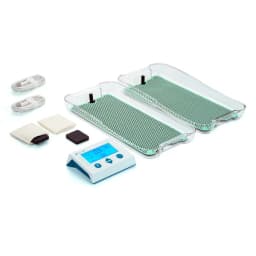
Iontophoresis is widely regarded as the most effective non-invasive treatment for plantar hyperhidrosis. The procedure involves placing your feet in shallow water trays while a device passes mild electrical current through the water. Response rates are consistently good in the published literature.
Home iontophoresis devices make this treatment practical for long-term use. Learn more in our detailed guide to iontophoresis at home. Treatment sessions typically run 20-40 minutes and are needed daily during the initial phase, tapering to 1-3 times per week for maintenance.
Oral Medications
Anticholinergic medications like glycopyrrolate and oxybutynin can reduce sweating systemically. They are particularly useful when sweating affects multiple body areas. Side effects include dry mouth, constipation, and blurred vision. These medications are covered in detail in our glycopyrrolate guide.
Botox Injections
Botulinum toxin injections into the soles of the feet can dramatically reduce sweating for 3-6 months per treatment. However, foot injections are notoriously painful due to the dense nerve endings in the soles. Most providers use nerve blocks or other anesthesia to manage the discomfort. Studies show good effectiveness.
Managing Foot Odour
Sweaty feet and foot odour often go hand in hand (the moisture creates a perfect environment for bacteria), but they are two separate issues that may need separate solutions:
- Antibacterial soap — Wash feet daily with antibacterial soap, paying attention to between the toes
- Dry thoroughly — After washing, dry feet completely, especially between toes. A hairdryer on a cool setting works well.
- Antibacterial sprays or powders — Apply after washing and drying
- Shoe disinfection — Use UV shoe sanitizers or antifungal shoe sprays to kill bacteria and fungi in your footwear
- Zinc oxide — Products containing zinc oxide can reduce bacterial growth on the skin
Preventing Complications
Chronic foot moisture increases your risk of several complications:
- Athlete's foot (tinea pedis) — Fungal infections thrive in warm, moist environments. Antifungal powders can help prevent this.
- Blisters — Moisture reduces skin friction tolerance. Moisture-wicking socks and properly fitted shoes are essential.
- Bacterial infections — Pitted keratolysis is a bacterial skin infection specifically associated with excessive foot sweating. It causes small pits in the skin and strong odour. Topical antibiotics are the standard treatment.
- Plantar warts — Moist skin may be more susceptible to HPV infection. Avoid walking barefoot in public areas.
Peeling Skin on Sweaty Feet
If the skin on your soles or between your toes is peeling, flaking, or coming away in soft white patches, constant sweat is almost always the underlying culprit. Skin that stays wet for hours softens and breaks down — a process called maceration. Macerated skin looks pale, soggy, and wrinkled (think fingertips after a long bath), and it peels easily because the outer layer has lost its structure. Worse, broken, waterlogged skin is an open invitation to the two infections that love sweaty feet: athlete's foot and pitted keratolysis.
Telling them apart is straightforward:
- Athlete's foot (fungal) typically starts between the toes with itchy, red or flaky skin that may crack or peel, sometimes spreading to the sole in a dry, scaly pattern. Itching is the giveaway.
- Pitted keratolysis (bacterial) shows up as clusters of small, shallow pits or craters on the pressure areas of the sole, usually without much itching — but with a distinctive strong, unpleasant smell that lingers even after washing.
- Plain maceration is peeling without pits, significant itching, or unusual smell — just soft, white, shedding skin where moisture sits.
Treatment starts with the same foundation either way: keep the feet dry. Moisture-wicking socks changed at least daily (see our sweat-proof socks round-up), rotated shoes, and an antiperspirant on the soles remove the environment both organisms need. For athlete's foot, a pharmacist can recommend an over-the-counter antifungal cream or spray — treatment usually takes a few weeks. Suspected pitted keratolysis, peeling that will not clear, spreading redness, or any broken skin if you have diabetes should go to a GP, who can prescribe topical antibiotics or stronger antifungals as needed.
And if your peeling, sweaty feet also feel oddly cold, that combination is more common than you would think — our guide to cold sweaty feet explains why it happens and what to do about it.
When to See a Doctor About Sweaty Feet
While many people manage sweaty feet effectively with OTC products and lifestyle changes, you should see a doctor if:
- Home remedies are not providing adequate relief
- You are developing recurrent skin infections or athlete's foot
- Sweating began suddenly in adulthood (this may indicate a secondary cause)
- Sweating is only on one foot (asymmetric sweating warrants investigation)
- Your quality of life is significantly affected
- You notice changes in skin colour, texture, or integrity
A dermatologist is typically the best specialist for hyperhidrosis. They can confirm the diagnosis, rule out secondary causes, and create a treatment plan tailored to your severity level.
Sources
- Nawrocki S, Cha J. The etiology, diagnosis, and management of hyperhidrosis: A comprehensive review. Journal of the American Academy of Dermatology. 2019;81(3):657-666.
- Pariser DM, Ballard A. Iontophoresis for palmar and plantar hyperhidrosis. Dermatologic Clinics. 2014;32(4):491-494.
- International Hyperhidrosis Society. Plantar Hyperhidrosis (Sweaty Feet). SweatHelp.org.
- Campanati A, Gregoriou S, Engel K, et al. Botulinum toxin for plantar hyperhidrosis. Journal of the European Academy of Dermatology and Venereology. 2020;34(8):1678-1685.