The odd position propantheline occupies
Propantheline bromide, sold in the UK as Pro-Banthine, is the only oral antimuscarinic licensed for hyperhidrosis in the UK. Every other tablet used for excessive sweating here — oxybutynin, glycopyrronium, clonidine — is prescribed off-label.
You would expect the licensed option to be the default. It usually is not. NICE's evidence summary notes that specialists advise using oxybutynin instead of the licensed propantheline, because the evidence for oxybutynin is better and it costs less.
That is worth understanding before an appointment, because it explains why you may be offered the "unlicensed" option and why that is not a red flag. Off-label prescribing is routine, legal and evidence-driven; it simply means the medicine is being used outside the exact wording of its licence.
How it works
Propantheline is an antimuscarinic. Sweat glands are triggered by acetylcholine, and antimuscarinics block that signal. Fewer signals reaching the gland means less sweat.
The important consequence is that it works systemically. Unlike an antiperspirant, which only affects the skin you put it on, a tablet reduces sweating across the whole body. That makes it a reasonable option for:
- Generalised sweating affecting several areas at once
- Areas that are difficult to treat topically — face, scalp, back, groin
- Cases where topical treatment has failed or caused too much irritation
And a poor fit if your sweating is confined to the underarms, where a 20% aluminium chloride antiperspirant or botulinum toxin will do the job without affecting the rest of you.
What to expect
| Form | Tablets, taken several times a day |
| Licensed for hyperhidrosis in UK | Yes — the only oral antimuscarinic that is |
| On the NHS | Prescription-only; you pay the standard charge, or nothing if exempt |
| Time to effect | Usually within days rather than weeks |
| Main limitation | Dry mouth |
Doses are started low and increased if needed. We deliberately do not publish dosing here — that is a conversation for your prescriber, who knows your other medications and history.
Side effects, and why people stop
Because it acts throughout the body, so do its side effects. The common ones are the classic antimuscarinic set:
- Dry mouth — by far the most common, and the usual reason people give up
- Blurred vision
- Constipation
- Difficulty passing urine
- Faster heartbeat
- Reduced tolerance of heat — sweating is how you cool down, so suppressing it everywhere has a real trade-off in hot weather or during exercise
That last point deserves emphasis. Anyone taking a systemic antimuscarinic should be careful in hot conditions and during hard exercise, because the body's main cooling mechanism is being deliberately dampened.
Propantheline is generally avoided in glaucoma, in people with urinary retention or an enlarged prostate, and in certain bowel conditions. Your prescriber will check all of this — mention every other medicine you take, including anything bought over the counter, since antimuscarinic effects stack.
Where it sits in the UK treatment ladder
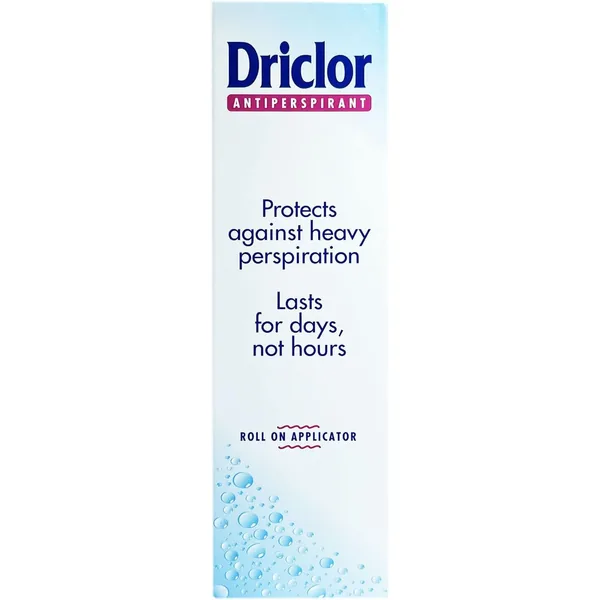
- 20% aluminium chloride antiperspirant — Driclor, Anhydrol Forte or Odaban, bought over the counter. First line in NICE's clinical knowledge summary. Applied to dry skin at night.
- Iontophoresis — particularly for hands and feet.
- Oral antimuscarinics — propantheline (licensed) or oxybutynin (off-label, usually preferred).
- Botulinum toxin — for severe localised sweating, funded by some ICBs.
- Surgery — rarely, and rarely funded.
Our UK treatment cost calculator sets out what each step costs privately and what the NHS is likely to fund.
Before your appointment
Take a severity score with you. UK guidance and local funding policies lean heavily on the Hyperhidrosis Disease Severity Scale, and "my sweating is barely tolerable and frequently interferes with my daily activities" is a far more useful thing to say than "I sweat a lot". Our severity self-check prints a summary with your score, the areas affected and what you have already tried.