There is no NICE guideline — and that explains a lot
If you have ever wondered why two people with the same symptoms get offered completely different treatment depending on where they live, this is why:
"NICE has not published a guideline on managing hyperhidrosis." — NICE evidence summary ES10
That is not an oversight anyone is hiding. It is stated plainly in NICE's own material. What exists instead is a patchwork:
| Document | What it covers |
|---|---|
| NICE Clinical Knowledge Summary on hyperhidrosis | Primary-care management, first-line treatment |
| NICE evidence summary ES10 | Oxybutynin for hyperhidrosis |
| NICE evidence summary on glycopyrronium | Glycopyrronium for hyperhidrosis |
| NICE interventional procedures guidance | Endoscopic thoracic sympathectomy of the upper limb |
| Local ICB and formulary policies | What actually gets funded in your area |
The absence of a national guideline is the single most useful thing to understand about hyperhidrosis care in the UK. Everything past the first step is decided locally, which is why the "postcode lottery" complaint is a genuine description rather than a grumble.
What the CKS actually recommends
For primary localised hyperhidrosis — the common kind, no underlying cause, confined to underarms, hands, feet, face or scalp — the CKS recommends:
- Advice on lifestyle measures
- Information and support about the condition
- An antiperspirant containing 20% aluminium chloride hexahydrate
- If those are inadequate or unacceptable, referral to a dermatologist may be required
Step three is the one most people get wrong, and it is worth being precise about because it is the difference between "nothing works for me" and a treated condition.
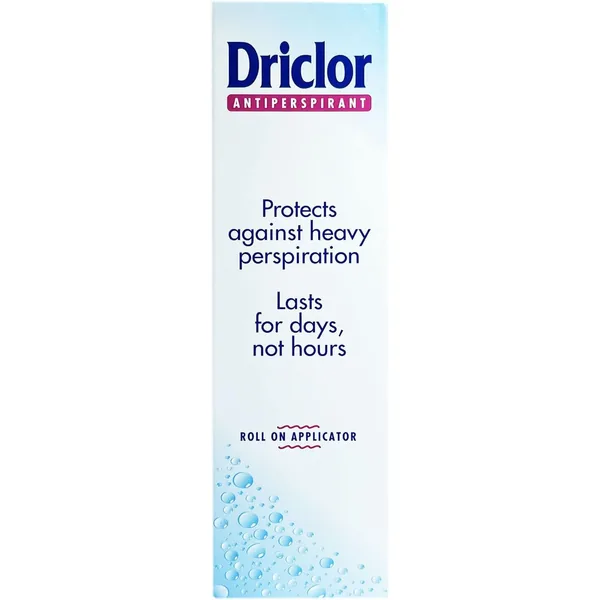
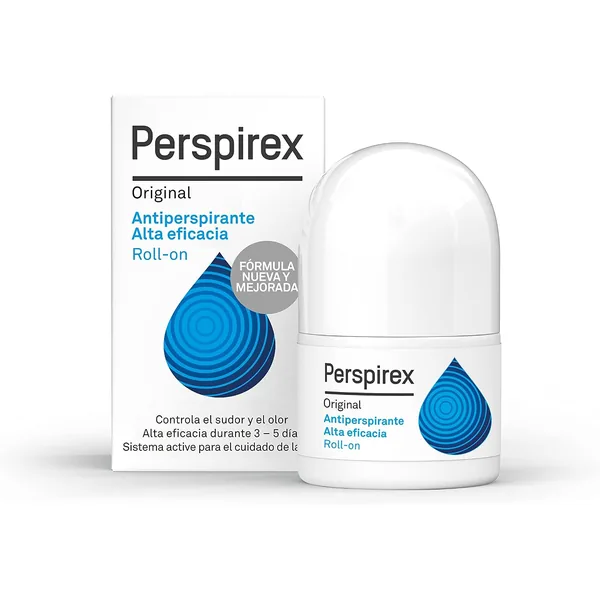
You do not need a prescription for it. In the UK, Driclor, Anhydrol Forte and Odaban all deliver 20% aluminium chloride hexahydrate and are sold over the counter as pharmacy (P) medicines — you buy them at the pharmacy counter, no GP appointment needed. Most of the internet says otherwise because most of the internet is American, and the equivalent US product, Drysol, is prescription-only there.
Apply to completely dry skin, at bedtime, and wash off in the morning. The plug needs six to eight hours to form and daytime sweating flushes the aluminium away before it can work. Our antiperspirant strength finder covers which formulation suits which body area.
What happens in secondary care
If first-line treatment fails and you are referred, the CKS lists what secondary care may offer:
- Systemic therapies — oral antimuscarinics such as oxybutynin, propantheline and glycopyrronium, plus clonidine, diltiazem and benzodiazepines
- Surgery — endoscopic thoracic sympathectomy, covered by NICE interventional procedures guidance
Not listed there but widely used in practice: iontophoresis, especially for hands and feet, and botulinum toxin for severe underarm sweating.
The licensing quirk worth knowing
Propantheline is the only oral antimuscarinic licensed for hyperhidrosis in the UK. Yet specialists frequently prefer oxybutynin, which is off-label for this use, because the evidence base for it is stronger and it costs less. Oral glycopyrronium is unlicensed here and the cost is generally prohibitive.
Off-label prescribing is entirely normal and legal — it means the medicine is being used outside the exact indication it was licensed for, based on clinical judgement and evidence. It is worth knowing about so that it does not come as a surprise if your GP mentions it. Our guide to oxybutynin for sweating covers what to expect.
Scotland, and the rest of the UK
NHS Scotland's Right Decision Service publishes a dedicated hyperhidrosis dermatology pathway, which is more prescriptive than anything available in England and worth reading even if you live elsewhere — it sets out referral criteria clearly. Individual English ICBs and NHS trusts publish their own management documents; several were refreshed during 2026.
Many of these use the Hyperhidrosis Disease Severity Scale to decide who qualifies for what. It is a four-point scale, and a score of 3 or 4 counts as severe. If you want to know where you sit before your appointment, our severity self-check uses the same wording and prints a summary you can take with you.
What this means practically
- Start with 20% aluminium chloride. It is first line in the guidance, it is cheap, and you can buy it today without seeing anyone.
- Apply it correctly — dry skin, night, wash off in the morning. This is the most common failure point.
- If it does not work, see your GP and say so explicitly, along with your HDSS score. The guidance route to anything further runs through primary care.
- Expect local variation. What your ICB funds for iontophoresis, botulinum toxin or surgery may differ from a neighbouring area. Ask directly what is commissioned locally.
- Discount US advice on availability. The clinical science travels; the licensing and prescription rules do not.