Why Iontophoresis at Home Is a Game-Changer for Hyperhidrosis
Iontophoresis at home has transformed the way people manage hyperhidrosis. Instead of driving to a clinic multiple times per week for treatment sessions, you can achieve the same results — often a substantial reduction in sweating for many people — from your kitchen table. For many people with sweaty hands and feet, home iontophoresis is the single most effective non-invasive treatment available.
The concept has been used medically since the 1950s, and the technology has become increasingly accessible and affordable for home use. If you have been struggling with excessive sweating and topical treatments are not cutting it, this guide covers everything you need to know.
How Iontophoresis Works
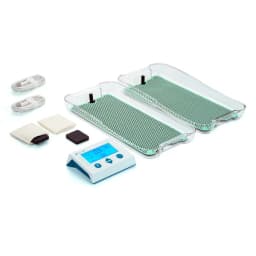
Iontophoresis involves submerging the affected body parts (usually hands or feet) in shallow pans of water while a medical device passes a mild electrical current through the water and into the skin. The exact mechanism is still debated in the medical literature, but the leading theory suggests the current disrupts the ion channels that signal sweat glands to activate, temporarily blocking sweat output.
Think of it like this: the electrical current creates a sort of "traffic jam" at the level of the sweat duct, preventing sweat from reaching the skin surface.
What the Science Says
Research consistently supports iontophoresis as a highly effective treatment:
- A systematic review in the British Journal of Dermatology found response rates of 81-100% for palmar and plantar hyperhidrosis
- The International Hyperhidrosis Society rates it as a Level A (strongest) recommendation for hands and feet
- A 2017 study in Dermatologic Surgery confirmed that home-use devices achieve results comparable to clinical devices
Commercial Devices vs. DIY Setups
You have two main options for iontophoresis at home: purchasing a commercial device or building a DIY setup.
Commercial Iontophoresis Devices
Purpose-built devices are the recommended route for most people. They offer precise current control, safety features, and typically come with customer support and warranty protection.
Popular devices include:
- Dermadry Total — Treats hands, feet, and underarms. User-friendly design with preset programs. Generally the most accessible entry point for beginners.
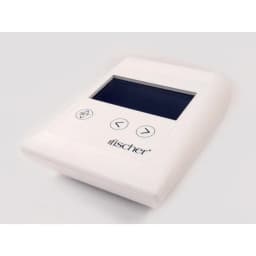
- Fischer MD-1a — Considered the clinical gold standard. More powerful output range and finer current control. Higher price point.
- RA Fischer (various models) — Long-established brand with multiple models for different needs and budgets.
- Hidrex — German-made devices with both direct current (DC) and pulsed current options.
Prices typically range from $300 (about £223) to $1,000+ (about £744) depending on the brand and features. Check our detailed comparison of the best iontophoresis machines for current pricing and recommendations.
DIY Iontophoresis
Some people build basic iontophoresis setups using batteries, aluminium pans, and connecting wires. While this can work, there are important considerations:
Potential advantages:
- Significantly lower cost (under $50 (about £37) in materials)
- Immediate availability
Significant disadvantages:
- No automatic shutoff or safety features
- Inconsistent current delivery
- Risk of skin burns from excessive current or poor contact
- No medical device certification or liability protection
- Harder to maintain proper treatment parameters
If you choose the DIY route, thoroughly research safe setups and start with very low current levels. However, for most people, the safety features and reliability of commercial devices justify the investment — especially considering you will be using it for years.
Setting Up Your Home Treatment
What You Need
- An iontophoresis device (commercial or DIY)
- Two shallow trays (most devices include these)
- Tap water (enough to cover the hands or soles of the feet)
- A comfortable chair at a table
- A towel
- 20-40 minutes of uninterrupted time
Step-by-Step Treatment Process
- Fill the trays with room temperature tap water to a depth of about 1-2 inches
- Connect the device according to manufacturer instructions
- Place your hands or feet into the water, ensuring the skin is fully submerged
- Turn on the device and slowly increase the current until you feel a mild tingling sensation. You should never feel pain.
- Maintain the session for the recommended duration (usually 20-30 minutes)
- Halfway through, most protocols recommend reversing the polarity (switching which tray is positive and negative)
- Turn off the device, remove your hands/feet, and pat dry
Important Safety Tips
- Remove all jewelry before treatment
- Cover any cuts or broken skin with petroleum jelly to prevent stinging
- Never use the device while connected to other electrical equipment
- Start with the lowest current setting and gradually increase
- Stop immediately if you experience pain (tingling is normal, pain is not)
Treatment Schedule and Timeline
Iontophoresis requires commitment, especially in the beginning. Here is what a typical treatment journey looks like:
Initial Phase (Weeks 1-3)
- Frequency: Daily sessions or every other day
- Duration: 20-30 minutes per session
- What to expect: Most people begin noticing reduced sweating after 6-10 sessions. Some respond faster, others take longer.
Transition Phase (Weeks 3-6)
- Frequency: Gradually reduce to 3-4 sessions per week
- Duration: 20-30 minutes per session
- What to expect: Sweating should be noticeably reduced. You are finding your minimum effective frequency.
Maintenance Phase (Ongoing)
- Frequency: 1-3 sessions per week (varies significantly between individuals)
- Duration: 15-30 minutes per session
- What to expect: Consistent dryness maintained with regular sessions. Missing sessions for more than a week typically leads to gradual return of sweating.
Tap Water vs. Additives
The conductivity of your water matters for iontophoresis effectiveness.
Tap Water
Most people can achieve good results with regular tap water. However, effectiveness can vary based on your local water's mineral content. Hard water (high mineral content) generally conducts current better than soft water.
When to Add Additives
If plain tap water is not yielding results after 2-3 weeks of consistent treatment, you may need to increase the water's conductivity:
- Baking soda — Add 1-2 tablespoons per tray. This is the most commonly recommended additive.
- Table salt — A small amount increases conductivity but may irritate skin at higher concentrations.
- Aluminium chloride solution — Some practitioners recommend adding a small amount of aluminium chloride antiperspirant to the water for enhanced effectiveness.
If you have very soft water (common with home water softeners), additives may be necessary from the start. Some patients find that using bottled mineral water provides more consistent results.
Treating Different Body Areas
Hands (Palmar Hyperhidrosis)
Hands are the easiest area to treat with iontophoresis and typically respond the best. Simply place each hand in a separate tray. Most clinical studies showing good results for many people were conducted on palmar hyperhidrosis.
Feet (Plantar Hyperhidrosis)
Feet respond very well to iontophoresis, though sessions may need to be slightly longer (25-40 minutes) due to the thicker skin on the soles. Make sure the water level covers the entire sole.
Underarms (Axillary Hyperhidrosis)
Treating underarms requires specialised electrode pads rather than water trays. Several commercial devices (including the Dermadry Total) include axillary attachments. Results are generally good but may take longer to achieve compared to hands and feet.
Face and Other Areas
Iontophoresis for the face is possible with specialised electrodes but should only be done under medical supervision due to proximity to the eyes and the sensitivity of facial skin.
Troubleshooting Common Issues
Not Seeing Results After 2 Weeks
- Increase session frequency to daily
- Try adding baking soda to the water
- Ensure current is high enough (should feel noticeable tingling)
- Check that electrode plates are making good contact
- Verify your device is functioning correctly
Skin Irritation or Redness
- Reduce current intensity
- Apply moisturizer after sessions
- Cover any cuts with petroleum jelly before treatment
- Ensure water is not too hot or cold
Tingling Feels Uneven
- Check that both trays have equal water levels
- Clean electrode plates with vinegar to remove mineral buildup
- Ensure hands/feet are fully submerged and not touching the electrodes directly
Cost and Insurance Considerations
Many insurance plans cover iontophoresis devices when prescribed by a physician for diagnosed hyperhidrosis. A prescription and letter of medical necessity from your dermatologist can significantly improve your chances of coverage. Even if insurance does not cover the device, the long-term cost is often lower than ongoing Botox treatments or prescription medications.
Sources
- Stolman LP. Treatment of hyperhidrosis. Dermatologic Clinics. 1998;16(4):863-869.
- Pariser DM, Ballard A. Iontophoresis for palmar and plantar hyperhidrosis. Dermatologic Clinics. 2014;32(4):491-494.
- Glaser DA, Galperin TA. Managing hyperhidrosis: emerging therapies. Dermatologic Clinics. 2014;32(4):549-553.
- International Hyperhidrosis Society. Iontophoresis Overview. SweatHelp.org.
- Reinauer S, Neusser A, Schauf G, Holzle E. Iontophoresis with alternating current and direct current offset: a new approach for treatment of hyperhidrosis. British Journal of Dermatology. 1993;129(2):166-169.