Why Do You Sweat When You Eat?
Breaking into a sweat over a vindaloo is one thing. Dripping from your forehead over a cheese sandwich is another. If your face, scalp or neck pours with sweat during meals — regardless of how spicy the food is — you may be dealing with gustatory sweating, and it is far more common than most people realise.
Excessive sweating when eating sits on a spectrum. At one end is the entirely normal, capsaicin-driven sweat of a hot curry. At the other are two medical patterns worth knowing about: Frey's syndrome, which typically follows surgery near the parotid gland, and diabetic gustatory sweating, which can signal nerve damage your GP should know about. Here is how to tell them apart — and what genuinely helps.
Normal Spicy-Food Sweating vs Gustatory Hyperhidrosis
Sweating when eating spicy food is a normal reflex, not a disorder. Capsaicin — the active compound in chilli peppers — binds to TRPV1 receptors in your mouth, the same receptors that detect real heat. Your nervous system reads the signal as "we are overheating" and switches on the sweat glands of the face and scalp to cool you down. Hot drinks and steaming food do something similar simply by warming the mouth. The response fades within minutes of finishing the meal.
Gustatory hyperhidrosis is different. The sweating is out of proportion to the food, triggered by mild or even bland flavours, and often severe enough to soak the hairline, upper lip or neck. Some people sweat at the mere smell or thought of food.
| Feature | Normal spicy-food sweating | Gustatory hyperhidrosis |
|---|---|---|
| Trigger | Hot, spicy or steaming food | Almost any food, sometimes just the thought of eating |
| Location | Forehead, upper lip, scalp — both sides | Face, scalp, neck; may be one-sided (Frey's) or both sides (diabetes-related) |
| Severity | Light, settles quickly after eating | Visible dripping, may soak hair and collar |
| Pattern | Occasional, dose-dependent on spice | Most meals, regardless of spice level |
If your pattern looks like the right-hand column, it is worth reading on — and worth a GP conversation. Gustatory sweating is usually a form of secondary hyperhidrosis, meaning something specific is driving it. Our guide to the types of hyperhidrosis explains the primary/secondary distinction in more detail.
Frey's Syndrome: Sweating After Parotid Surgery
Frey's syndrome (also called auriculotemporal syndrome or gustatory sweating syndrome) is the best-understood cause of one-sided sweating when eating.
The parotid gland — your largest salivary gland — sits just in front of each ear, and the auriculotemporal nerve carries the "start salivating" signal to it. When the gland or nerve is damaged, most commonly during parotid gland surgery (parotidectomy) but occasionally after facial injury or infection, the severed nerve fibres regrow. The problem is that some of them rewire into the wrong target: instead of reconnecting to the salivary gland, they grow into the sweat glands and small blood vessels of the overlying skin.
The result is a crossed wire. Every time your brain sends the signal to salivate — when you eat, chew, or even think about food — that patch of skin sweats and flushes instead.
Typical features of Frey's syndrome:
- Sweating, warmth and redness over one cheek, temple or the area in front of the ear
- Triggered by eating, especially sour or strongly flavoured foods
- Appears months to years after parotid surgery — often 6 to 18 months later, once nerve regrowth is established
- The affected area can be mapped precisely with a starch–iodine (Minor's) test, which turns dark where sweat is produced
Some degree of gustatory sweating develops in a large proportion of people after parotidectomy, though many cases are mild enough that patients never mention them. If yours is visible or socially limiting, it is treatable — see the management section below.
Gustatory Sweating and Diabetes: A Sign Worth Flagging
There is a second, less widely known pattern: gustatory sweating as a complication of diabetes.
In longstanding or poorly controlled diabetes, persistently high glucose can damage the autonomic nerves — the ones that run background functions like heart rate, digestion and sweating. This is the same family of nerve damage as peripheral neuropathy, which the NHS describes in detail. When the autonomic fibres supplying the face are affected, eating can trigger profuse sweating across both sides of the face, scalp and neck — sometimes drenching enough that people avoid eating in company.
Key differences from Frey's syndrome:
- Both sides of the face are usually affected, not a single patch
- There is no history of parotid surgery or facial injury
- It is more common in people who have had diabetes for many years, and is associated with other complications such as kidney disease and neuropathy in the feet
This matters because gustatory sweating in diabetes is a flag, not just a nuisance. It suggests autonomic nerve involvement, which your GP or diabetes team will want to know about — both to review your glucose control (symptoms sometimes improve when control improves) and to check for related complications. If you have diabetes and have developed heavy sweating during meals, book a routine GP appointment and mention it specifically. Our guide on when to see a doctor about sweating covers the other red flags worth knowing.
Common Trigger Foods
Whatever the underlying cause, certain foods reliably make gustatory sweating worse:
- Spicy food — capsaicin is the single biggest trigger
- Sour and acidic foods — citrus, vinegar, pickles; strong salivary stimulation means strong misfired signals in Frey's syndrome
- Strong cheeses — frequently reported, particularly in diabetic gustatory sweating
- Hot drinks and steaming food — direct heat on top of the gustatory reflex
- Alcohol — dilates blood vessels and amplifies flushing
- Chocolate and very sweet foods — reported triggers for some people
A simple two-week food-and-symptom diary is the quickest way to find your personal pattern. Diet will not cure gustatory sweating, but avoiding your worst triggers before meetings, dates or meals out gives you back a measure of control. For the broader picture, see our guide to how diet affects sweating.
How to Manage Sweating When Eating
Topical Antiperspirants on the Face
Clinical-strength antiperspirants are the sensible first step, but facial skin is thinner and more sensitive than the underarms, so apply methodically:
- Apply at night to completely dry skin — the active ingredient works its way into sweat ducts overnight
- Use a thin layer only on the affected area (forehead, hairline, the mapped Frey's patch), staying well clear of the eyes, nostrils and lips
- Wash off in the morning — protection persists after the product is removed
- Start with two or three nights a week and build up only if your skin tolerates it; stop if you get significant stinging or redness
- Avoid applying immediately after shaving or exfoliating
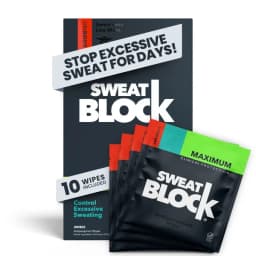
Individually wrapped aluminium chloride wipes such as SweatBlock wipes make controlled facial application easier than roll-ons designed for underarms. For product picks chosen specifically for facial skin, see our round-up of the best products for face sweating, and note that some links on this site are affiliate links — full details on our disclaimer page.
Glycopyrrolate Cream via Your GP
For gustatory sweating specifically, topical glycopyrrolate (glycopyrronium) has some of the best evidence of any treatment. It is an anticholinergic: applied to the skin, it blocks the chemical signal that switches sweat glands on, exactly where the miswired nerves are firing. Studies in both Frey's syndrome and diabetic gustatory sweating have shown marked reductions in meal-time sweating, and because it is applied to a small area, systemic side effects are far less likely than with anticholinergic tablets.
In the UK, glycopyrronium cream for facial sweating is prescribed off-label, usually by a GP or dermatologist, so this is a conversation to have at an appointment rather than something to buy over the counter. Our full guide to glycopyrrolate for sweating covers how the drug works, what the research shows and the side effects to watch for. Telehealth services such as Twofold Rx offer prescription topical anticholinergics in some markets, though UK availability should be checked with the provider.
Botulinum Toxin for Frey's Syndrome
For confirmed Frey's syndrome, botulinum toxin (Botox) injections into the affected patch of skin are widely regarded as the most effective treatment. The toxin blocks the nerve-to-sweat-gland signal directly, and because the starch–iodine test maps the exact area, injections can be precisely targeted. Relief typically lasts several months to over a year before repeat treatment. It is a specialist procedure — usually via an ENT, maxillofacial or dermatology referral. See our guide to Botox for sweating for what it involves.
Everyday Tactics
- Let hot food and drinks cool slightly before eating
- Order mild when eating out matters more than the menu
- Sit away from radiators and near ventilation in restaurants, and keep blotting tissues to hand
For the full toolkit on managing a sweaty face day to day — including craniofacial hyperhidrosis that is not meal-related — see our complete guide to facial sweating solutions.
When to See a GP
Most sweating when eating is benign, but book a GP appointment if:
- You have diabetes and have developed new sweating during meals — possible autonomic neuropathy worth reviewing
- Sweating is one-sided and you have had parotid or facial surgery, injury or infection — likely Frey's syndrome, which can be formally diagnosed and treated
- Meal-time sweating appeared suddenly with no obvious cause, or is worsening
- It comes with other symptoms — weight loss, palpitations, fever or night sweats
- It is affecting your willingness to eat with other people
None of these mean something serious is inevitable — but each has a specific, checkable cause, and effective treatment usually starts with an accurate diagnosis. The NHS page on excessive sweating is a good primer before your appointment.