What Is Compensatory Sweating?
Compensatory sweating is excessive sweating that develops in new body areas after a medical procedure — most commonly endoscopic thoracic sympathectomy (ETS) surgery — has successfully reduced sweating in the originally treated area. It is the most significant side effect of ETS surgery and, for some patients, becomes a larger problem than the hyperhidrosis they sought to treat.
If you have had ETS surgery and are now dealing with unexpected sweating on your trunk, back, legs, or abdomen, you are experiencing a well-documented phenomenon that affects the majority of ETS patients. Understanding why it happens and what you can do about it is essential.
Why Compensatory Sweating Happens After ETS
ETS surgery works by cutting or clamping the sympathetic nerve chain in the chest, which interrupts the nerve signals that cause sweating in the hands, face, or underarms. The surgery is highly effective for its targeted area — success rates exceed 95% for palmar hyperhidrosis.
However, your body still needs to regulate its temperature. When the sympathetic nerves to one area are severed, the body compensates by increasing sweat output from areas that are still innervated. The remaining functioning sweat glands essentially pick up the slack.
The mechanism is not fully understood, but researchers believe it involves:
- Reflex redistribution — The body redirects thermoregulatory sweating to areas with intact nerve supply
- Loss of feedback — The sympathetic nervous system loses the ability to fine-tune its output when a major branch is interrupted
- Upregulation of remaining pathways — The remaining sweat-producing nerves may become more sensitive to stimulation
How Common Is It?
Studies consistently report compensatory sweating in the majority of ETS patients:
- Mild compensatory sweating: the most common presentation
- Moderate to severe: a substantial minority
- Severe enough to regret surgery: a small but real proportion
A large meta-analysis published in The Annals of Thoracic Surgery found that compensatory sweating occurred in around 60% of patients when results were pooled. The severity varies enormously from person to person.
Where Does Compensatory Sweating Occur?
The most commonly affected areas include:
- Back — The most frequently reported site, particularly the lower back
- Trunk and abdomen — Can be diffuse or concentrated in specific zones
- Thighs and groin — Often worse in warm environments or during physical activity
- Buttocks — Can make sitting uncomfortable
- Feet — Sometimes new foot sweating develops even if it was not present before surgery
The location and severity are unpredictable and do not always correlate with the level of the sympathetic chain that was interrupted, though higher-level interruptions (T2) are generally associated with more severe compensatory sweating than lower-level ones (T3-T4).
Risk Factors for Severe Compensatory Sweating
Research has identified several factors that may increase the risk of developing significant compensatory sweating:
- Higher level of sympathectomy — T2 level interruptions are associated with worse compensatory sweating than T3 or T4
- Bilateral surgery — Having both sides treated increases the risk compared to unilateral surgery
- Body mass index — Higher BMI has been correlated with more severe compensatory sweating
- Extent of nerve disruption — Cutting (irreversible) vs. clamping (potentially reversible) affects risk
- Pre-existing generalized sweating tendency — Patients who already sweat heavily in untreated areas before surgery may experience worse compensatory sweating
Management Strategies
Topical Treatments
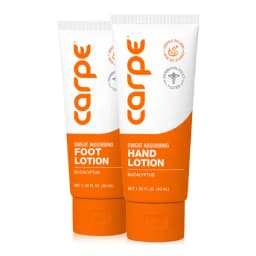
- Clinical-strength antiperspirants — Apply aluminium chloride-based products to the affected trunk areas at night. While designed for underarms, these products can be used on the back, chest, and other areas. See our guide to the best antiperspirants.
- Topical glycopyrrolate — Compounded topical anticholinergic solutions can be applied directly to affected areas. Your dermatologist can prescribe these.
- Anticholinergic wipes — Qbrexza (glycopyrronium) wipes can be used off-label on trunk areas.
Oral Medications
- Anticholinergics — Glycopyrrolate or oxybutynin taken orally can reduce compensatory sweating systemically. However, the side effects (dry mouth, constipation, blurred vision) may limit tolerability.
- Clonidine — This centrally-acting alpha-2 agonist has shown some benefit for compensatory sweating in small studies. It works by reducing overall sympathetic nervous system output.
Botox Injections
Botulinum toxin injections can be effective for managing compensatory sweating in localized areas. However, treating large trunk areas requires many injection points, making the procedure time-consuming and expensive. It is most practical for smaller, well-defined areas of compensatory sweating. Effects last 3-6 months.
Reversal Surgery (Clamp Removal)
If the original ETS surgery used clamps rather than nerve cutting, reversal may be possible. Removing the clamps allows nerve regeneration, which can resolve compensatory sweating — but it also means the original hyperhidrosis typically returns.
Success rates for reversal vary:
- Best results when performed within 6-12 months of the original surgery
- Longer delays reduce the likelihood of nerve recovery
- Not all patients achieve full reversal of compensatory sweating
- Original sweating usually returns if the reversal is successful
This underscores the importance of surgeons using reversible clamping techniques rather than irreversible nerve cutting when performing ETS.
Clothing and Lifestyle Adaptations
- Moisture-wicking base layers — Performance fabrics designed for athletes can help manage trunk sweat
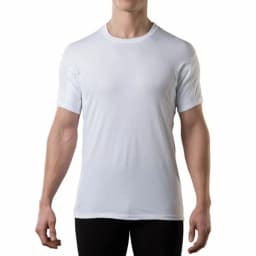
- Sweat-proof undershirts — Products with built-in barriers prevent sweat from reaching outer clothing
- Dark clothing and patterns — Hide sweat marks on areas you cannot effectively treat
- Climate control — Staying in cool environments and avoiding triggers (hot food, caffeine, alcohol) may reduce episodes
- Portable fans — Small personal fans can help in warm environments
The Emotional Impact
Compensatory sweating after ETS surgery can be emotionally devastating, particularly because patients underwent surgery hoping to solve a sweating problem, only to develop a different (and sometimes worse) one. Feelings of regret, frustration, anger, and depression are common and valid.
If you are struggling emotionally with compensatory sweating:
- Connect with others — Online support communities for post-ETS patients can provide understanding and practical advice from people who share your experience
- Seek professional support — A therapist experienced with chronic medical conditions can help you process these feelings
- Focus on what you can control — While you cannot undo the surgery, the management strategies above can provide meaningful relief
- Explore medical options — New treatments continue to be developed, and a dermatologist specializing in hyperhidrosis may offer options you have not tried
Should You Consider ETS Surgery? A Cautionary Note
If you are reading this article before surgery, this information is especially important. ETS should be considered only after exhausting all other treatments, including:
- Clinical-strength antiperspirants
- Iontophoresis (for hands and feet)
- Oral anticholinergics
- Botox injections
- Topical treatments
Make sure any surgeon you consult thoroughly discusses the risk of compensatory sweating, uses reversible clamping techniques, and operates at the lowest effective level (T3-T4 rather than T2 when appropriate).
Sources
- Dewey TM, Herbert MA, Hill SL, et al. One-year follow-up after thoracoscopic sympathectomy for hyperhidrosis: outcomes and the effect of T2 versus T3 ablation. The Annals of Thoracic Surgery. 2006;81(4):1227-1232.
- Baumgartner FJ, Toh Y. Severe hyperhidrosis: clinical features and current thoracoscopic surgical management. The Annals of Thoracic Surgery. 2003;76(1):272-278.
- International Hyperhidrosis Society. ETS Surgery and Compensatory Sweating. SweatHelp.org.
- Loscertales J, Congregado M, Jimenez-Merchan R, et al. Sympathetic chain clipping for hyperhidrosis is not a reversible procedure. Surgery Today. 2012;42(12):1155-1159.