Best Underarm Sweat Pads (2026)
Underarm sweat pads are one of the cheapest, simplest ways to stop sweat marks showing through your clothes. They don't reduce sweating — they catch it before it reaches the fabric — which makes them a genuinely useful stopgap for interviews, presentations, weddings, and any day you cannot afford visible patches.
This guide covers the main types of sweat pads for underarms, what separates a good pad from one that peels off by lunchtime, where to buy them in the UK, and — honestly — when you have outgrown pads and should move to a sweat-proof undershirt or a clinical antiperspirant instead.
This site earns affiliate commissions from some product links (see our disclaimer). We have no affiliate relationship with any sweat pad brand, so the advice below is entirely editorial.
The Three Types of Underarm Sweat Pads
1. Disposable Adhesive Pads
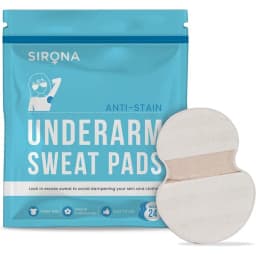
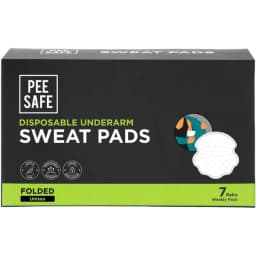
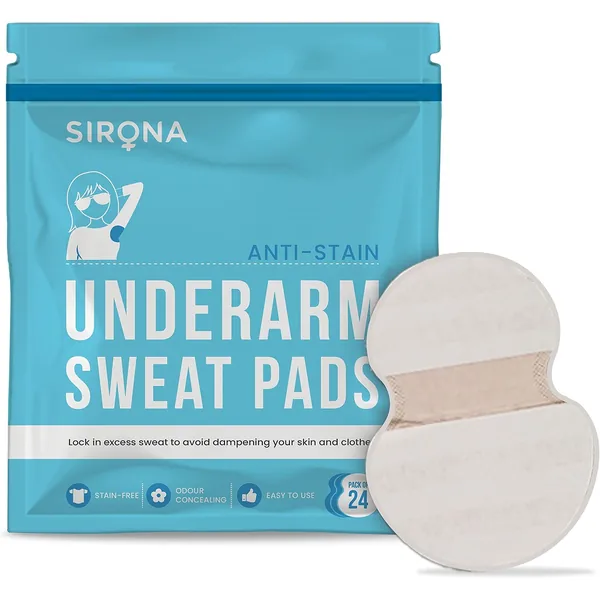
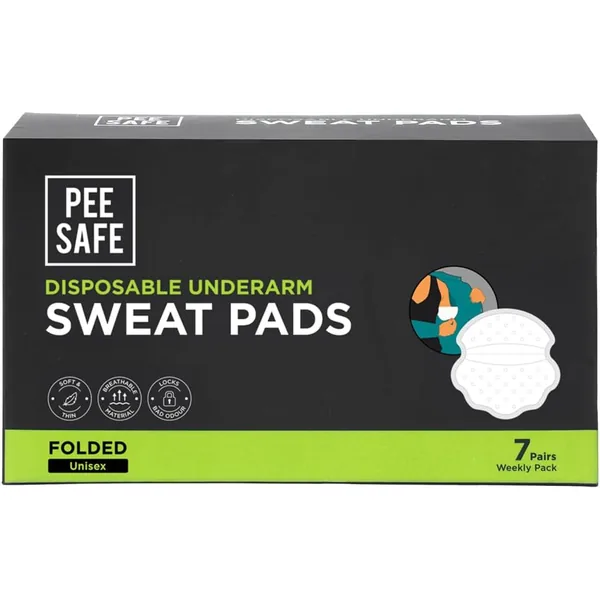
The most common type: a thin absorbent pad with a peel-off adhesive backing, worn once and thrown away. Depending on the design, the pad sticks either to the inside of your garment or directly to your skin.
Strengths:
- Cheap to try — typically £5–£12 for a box of 20–40 in the UK
- Thin and discreet under most fabrics
- Hygienic — fresh pad every wear, no laundry
- Widely available at Boots, Superdrug, Amazon and most supermarkets
Weaknesses:
- Adhesive is the weak point — pads can curl, bunch or detach with arm movement, especially on skin
- Fixed absorbency — once saturated, sweat wicks past the edges
- Ongoing cost adds up with daily wear (a pad per underarm, per day)
- Skin-adhesive versions can irritate sensitive skin and don't cope well with underarm hair
Best for: occasional use — event days, interviews, hot commutes — rather than every day.
2. Reusable Bamboo or Cotton Pads
Washable fabric pads, usually bamboo viscose or cotton with an absorbent core, that either snap around a bra strap or sit inside a sleeve/strap arrangement. You wash and re-wear them like any garment.
Strengths:
- Cheaper long-term for daily wear — a set of 4–8 pads (£10–£20) replaces months of disposables
- Softer against the skin; no adhesive, so nothing to irritate
- Bamboo wicks well and holds more liquid than most thin disposables
- Less waste
Weaknesses:
- Bulkier than disposables — more likely to show under fitted or thin fabrics
- Strap-mounted designs shift with movement and don't suit every outfit (they generally need a bra or vest to anchor to)
- Need washing after every wear to stay hygienic
Best for: regular, predictable use where discretion matters less than comfort and cost — e.g. under work blouses, jumpers and loose shirts.
3. Garment-Integrated Pads (Sweat-Proof Undershirts)
The third category solves the biggest problem with pads — staying put — by building the pad into the garment itself. Sweat-proof undershirts like the Thompson Tee sew a waterproof barrier into the underarm of the shirt, while Ejis uses absorbent, silver-infused panels. Nothing to stick, nothing to slip, and no visible edge under your outer layer.
They cost more upfront (roughly £25–£35 per shirt), but for anyone dealing with underarm sweating most days, they are the more reliable option — and over a year of daily disposable pads, often the cheaper one too. Our full sweat-proof undershirt comparison covers the options in detail.
Quick Comparison
| Disposable adhesive | Reusable bamboo/cotton | Garment-integrated (undershirt) | |
|---|---|---|---|
| Typical UK cost | £5–£12 per box (single use) | £10–£20 per set (washable) | £25–£35 per shirt |
| Discretion | Very good | Moderate | Excellent |
| Stays in place | Variable — adhesive dependent | Variable — anchor dependent | Always |
| Absorbency ceiling | Low–moderate | Moderate | High (waterproof barrier types) |
| Daily-wear cost over a year | Highest | Low | Low–moderate |
| Best for | Occasional/event use | Regular use with a bra/vest | Daily wear, heavier sweating |
What to Look For in a Sweat Pad
- Adhesive type. Garment-adhesive pads stay put better than skin-adhesive ones for most people, and are the only sensible choice if you don't shave your underarms. Skin-adhesive pads sit closer and hide better, but demand clean, dry, hair-free skin to grip.
- Absorbent capacity. Manufacturers rarely publish figures, so use pad thickness and layer count as a proxy. A thin pad that saturates by mid-morning is worse than no pad — soaked pads press wet fabric against your shirt.
- Shape and contour. Underarms move constantly. Fan-shaped or contoured pads with a slight curve crease less than plain rectangles and are far less likely to bunch.
- Breathability. A fully plastic-backed pad traps heat, and heat makes you sweat more. Look for pads with a breathable outer layer.
- Skin sensitivity. If you react to plasters, you will likely react to skin-adhesive pads. Choose garment-adhesive or reusable fabric pads, and stop using anything that leaves the skin red or itchy.
- Fabric pairing. Every pad shows more under tight, thin, or pale clothing. If your wardrobe is mostly fitted shirts, an undershirt with integrated protection will always look cleaner than a stuck-on pad.
Where to Buy Sweat Pads in the UK
Disposable underarm sweat pads are stocked on the high street — Boots and Superdrug both carry them in the deodorant aisle — and Amazon has the widest range of both disposable and reusable options, including multipacks that bring the per-pad cost down. Supermarket availability is patchier but improving. Reusable bamboo pads and bra liners are mostly an online purchase.
There is no single standout brand in this category: pads are a commodity product, and box-to-box consistency matters more than the name on the packet. Buy a small box first, test it through a full working day with normal arm movement, and only then commit to a multipack.
Sweat Pads for Men
Nothing about a sweat pad is gender-specific, but two practical issues come up repeatedly for men:
- Underarm hair stops skin-adhesive pads gripping and makes removal genuinely unpleasant. Garment-adhesive pads sidestep this completely.
- Shirt fit. Slimmer-fit shirts press the pad against the body, which keeps it in place but makes the outline more visible through lighter fabrics.
In practice, many men who start with pads end up with a sweat-proof undershirt instead — the Thompson Tee in particular was designed by a hyperhidrosis sufferer for exactly this use case, and there is no daily sticking, positioning or peeling involved.
Under-Breast Sweat Pads
Sweating in the fold beneath the breasts is extremely common and rarely talked about. Under-breast sweat pads — usually sold as bra liners — are soft cotton or bamboo strips that tuck along the underwire or band of a bra, absorbing sweat and reducing the skin-on-skin friction that causes chafing and soreness.
What to know before buying:
- Reusable liners are the standard here. Disposable adhesive strips exist but struggle to stay put against constant movement; washable bamboo liners that hook or tuck around the bra band work better for most women.
- Fit matters more than absorbency. A liner that migrates or folds is worse than none. Look for liners sized to your band measurement, with a slight curve to follow the bra line.
- Skin health is the real reason to bother. Persistent moisture in the under-breast fold can lead to irritation and fungal skin infections (intertrigo). The NHS advises keeping skin folds clean and dry — a liner helps with exactly that. If the skin is already red, broken or sore, speak to a pharmacist or your GP rather than covering it with a pad.
When Pads Aren't Enough
Sweat pads manage the symptom — wet marks — not the sweating itself. If you are getting through multiple pads a day, or sweat is beating the pad before lunchtime, work up the ladder:
- Clinical-strength antiperspirant. Aluminium chloride products applied at night reduce how much you sweat in the first place. See our guides to clinical antiperspirants and the best antiperspirants for excessive sweating.
- Sweat-proof undershirt. The reliable version of a pad — an integrated barrier that cannot peel off. Compare options in our sweat-proof undershirt roundup.
- Combine both. Antiperspirant to reduce output, undershirt to catch the rest. This two-layer approach handles all but the most severe underarm sweating.
- Speak to your GP. If underarm sweating is frequent, unexplained, or affecting your daily life, the NHS recommends seeing a GP — excessive sweating (hyperhidrosis) is a recognised medical condition with prescription treatment routes. Our underarm sweating guide walks through the full range of options, from over-the-counter to clinical.
Our Verdict
For occasional cover — an interview, a wedding, a big presentation — disposable garment-adhesive sweat pads are cheap, discreet and effective, and a box from Boots or Amazon is a sensible first purchase. For regular wear with a bra or vest to anchor to, reusable bamboo pads cost less over time and are kinder to skin. And for under-breast sweating, a washable bra liner is a small purchase that solves a disproportionate amount of discomfort.
But if you are reaching for pads most days, they are the wrong tool. A sweat-proof undershirt does the same job without the daily ritual or the mid-afternoon peel, and pairing it with a clinical antiperspirant addresses the sweating itself rather than just hiding it.
Sources
- NHS — Excessive sweating (hyperhidrosis) — NHS
- NICE CKS — Hyperhidrosis — National Institute for Health and Care Excellence
- Hyperhidrosis patient information leaflet — British Association of Dermatologists