Understanding Axillary Hyperhidrosis
Axillary hyperhidrosis — excessive underarm sweating — is the most common form of hyperhidrosis, affecting an estimated 1.4% of the US population (2.8% have hyperhidrosis overall, around half of it axillary). If you have been searching for an underarm sweating treatment that actually works, you are not alone. Tens of millions of people worldwide live with some form of hyperhidrosis, and the underarms are the number one affected area.
Underarm sweating becomes clinical when it exceeds what the body needs for thermoregulation. Soaking through shirts within minutes of putting them on, avoiding certain colours and fabrics, constantly pressing your arms against your sides to hide wet patches — these are the hallmarks of axillary hyperhidrosis, and they take a real toll on quality of life.
If you are in the UK, ignore rankings that start with Qbrexza or US insurance. The first step is a 20% aluminium chloride pharmacy medicine. Qbrexza and Sofdra are not licensed here. The route after that is a GP, then local NHS funding, which the NHS treatment guide explains. Axhidrox is the prescription cream NICE has appraised for severe underarm sweating in adults, and only after simpler treatment has failed.
The sections below describe treatments you will see on American sites as well as the UK options. Where a product is not licensed here, the section says so.
All Underarm Sweating Treatments Ranked
Tier 1: First-Line Treatments
Clinical-Strength Antiperspirants
Effectiveness: Moderate | Cost: Low | Availability: Over-the-counter
Clinical-strength antiperspirants containing 10-20% aluminium chloride hexahydrate are the recommended starting point for axillary hyperhidrosis. They work by forming temporary plugs in the sweat duct openings, physically blocking sweat from reaching the skin surface.
How to use them effectively:
- Apply at bedtime to completely dry underarms (moisture causes irritation and reduces efficacy)
- Use a thin, even layer — more product does not mean more protection
- Wash off in the morning and apply your regular deodorant if desired
- Start with nightly application for 1-2 weeks, then reduce to 2-3 nights per week for maintenance
- If irritation occurs, apply 1% hydrocortisone cream in the morning and reduce application frequency
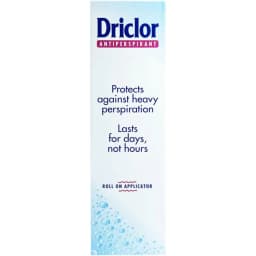
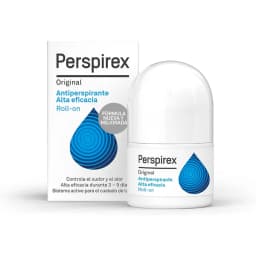
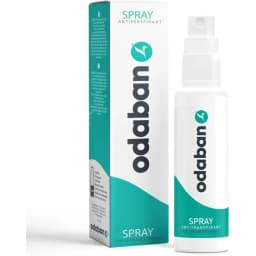
In the UK, start with Driclor, Anhydrol Forte or Odaban (20% aluminium chloride, pharmacy medicines) or Perspirex if a 20% roll-on stings. Certain Dri and SweatBlock publish 15% and are US imports.
Advertising disclosure: these buying links may earn a commission.
Driclor on Amazon UK → | Anhydrol Forte at a UK pharmacy → | Odaban on Amazon UK → | Perspirex on Amazon UK →
The wider comparison is best antiperspirants. Strength is covered in strongest antiperspirants.
Best for: Mild to moderate axillary hyperhidrosis, or as a complement to other treatments.
Qbrexza: not licensed in the UK
Qbrexza is a US prescription glycopyrronium cloth. It is not licensed in the UK, so a GP cannot prescribe it and it is not an NHS option. US insurance prices do not apply. The prescription cream NICE has appraised for severe underarm sweating in adults is Axhidrox, and only after lifestyle measures, aluminium antiperspirants and oral antimuscarinics have failed or cannot be used. Read Axhidrox and NICE TA1175. The Qbrexza note describes the American product. It is not a UK buying guide.
Tier 2: Medical Treatments
Botox (OnabotulinumtoxinA)
Effectiveness: High | Cost: High | Availability: In-office procedure
In the UK, botulinum toxin for severe underarm sweating is a hospital treatment. Whether the NHS pays is decided by your local Integrated Care Board. A US FDA licence is not that decision. The toxin blocks the release of acetylcholine at the nerve-sweat gland junction.
What to expect:
- 50 units are injected per underarm (100 units total) in a grid pattern
- The procedure takes 15-20 minutes
- Results begin within 2-4 days, with full effect by 2 weeks
- Duration: 4-12 months (average 6-7 months)
- Cost and funding: see the NHS treatment guide. US insurance rules do not describe what you pay here.
Trials report a substantial average reduction in underarm sweating. The figure and the study link are on that NHS guide. Read the Botox for sweating page for how the injections are done.
Best for: Moderate to severe axillary hyperhidrosis when antiperspirants are insufficient.
miraDry
Effectiveness: Very high | Cost: Very high (upfront) | Availability: In-office procedure
miraDry uses microwave energy to destroy underarm sweat glands. Sweat glands do not grow back, so the change is lasting for the glands that are treated. It is not routinely funded by the NHS. A US FDA clearance is a US device status, not an NHS decision. Private costs are on the NHS treatment guide.
What to expect:
- Treatment takes about 1 hour per session
- Local anesthesia is administered to numb the underarms
- Most patients need 1-2 sessions spaced 3 months apart
- Downtime: 2-5 days of swelling, tenderness, and numbness
- Cost: $2,000-$3,500 (about £1,487–2,603) per session
- Results are permanent
miraDry also reduces underarm odour and hair, as the microwave energy affects odour-producing apocrine glands and some hair follicles. However, the upfront cost is significant, and insurance coverage varies. Visit our miraDry treatment guide for a full breakdown of what to expect.
Best for: Patients seeking a permanent solution who can afford the upfront investment.
Iontophoresis
Effectiveness: Moderate | Cost: Moderate | Availability: At-home device
While iontophoresis is most commonly associated with hands and feet, specialised underarm applicators are available for axillary use. The treatment passes a mild electrical current through water-soaked pads placed on the underarms, temporarily disrupting sweat gland function.
Underarm iontophoresis requires consistent use — typically 3-4 sessions per week during the initial phase, then 1-2 weekly maintenance sessions. Results are more modest for underarms than for palms and soles, with approximately 50-70% of patients reporting meaningful improvement.
Tier 3: Systemic and Surgical Options
Oral Medications
Effectiveness: Moderate to high | Cost: Low | Availability: Prescription
Oral anticholinergics work systemically to reduce sweating throughout the body. While effective, they affect all sweat glands (not just the underarms) and carry systemic side effects.
- Glycopyrrolate (Robinul): 1-2 mg, two to three times daily. The most commonly prescribed option
- Oxybutynin: 2.5-5 mg, twice daily. Available in extended-release form
- Propantheline: Less commonly used but another available option
Common side effects include dry mouth (the most frequent complaint), constipation, blurred vision, urinary retention, and heat intolerance (because sweating is reduced everywhere, the body's cooling capacity is diminished).
Best for: Patients with sweating in multiple body areas, or as an adjunct to localized treatments.
Endoscopic Thoracic Sympathectomy (ETS)
Effectiveness: Very high | Cost: High | Availability: Surgical procedure
ETS involves surgically cutting or clamping the sympathetic nerves that control underarm sweating. The procedure is performed under general anesthesia using small incisions and a camera (endoscope).
While ETS is highly effective at stopping underarm sweating, it carries a significant risk of compensatory sweating — heavy sweating that develops in other body areas (back, chest, groin, legs) after surgery. Compensatory sweating occurs in around 60% of patients (pooled estimate 62%, 95% CI 51–72%) and can sometimes be more severe than the original problem.
Due to this risk, ETS is generally considered a last resort for underarm hyperhidrosis, reserved for severe cases where all other treatments have failed. It is more commonly performed for palmar hyperhidrosis, where the risk-benefit ratio is more favorable.
Best for: Truly refractory cases after exhausting all other options. Extensive counseling about compensatory sweating risk is essential.
Tier 4: Emerging Treatments
Microwave and Radiofrequency Devices
Several newer energy-based devices are in various stages of development and approval for underarm sweating. These aim to replicate miraDry's success with potentially lower cost or fewer side effects.
Topical Sofpironium Bromide
Sofpironium gel is sold in the US as Sofdra. It is not licensed in the UK. See Can you get Sofdra in the UK?. It is not an alternative you can be prescribed here.
Building Your Treatment Plan
The most effective approach to underarm sweating treatment often combines multiple strategies:
For Mild Axillary Hyperhidrosis
- Start with a clinical-strength antiperspirant (12-20% aluminium chloride)
- Wear moisture-wicking undershirts
- Choose sweat-hiding clothing (dark colours, patterns, breathable fabrics) — or use underarm sweat pads to protect shirts on lighter days
- If a pharmacy antiperspirant is not enough, see a GP. Do not ask for Qbrexza: it is not licensed in the UK
For Moderate Axillary Hyperhidrosis
- Try clinical-strength antiperspirant first
- If inadequate, discuss Botox injections with a dermatologist
- Supplement with oral medication if needed
- Invest in sweat-proof undershirts for daily use
For Severe Axillary Hyperhidrosis
- Discuss Botox or miraDry with a hyperhidrosis specialist
- Consider oral anticholinergics for additional systemic control
- Evaluate miraDry for a permanent solution
- Reserve ETS as a last resort after thorough counseling
Daily Management Tips
Morning Routine
- Shower with antibacterial soap to reduce odour-causing bacteria
- Dry underarms completely — use a hair dryer on cool if needed
- Apply regular deodorant (if using clinical antiperspirant at night)
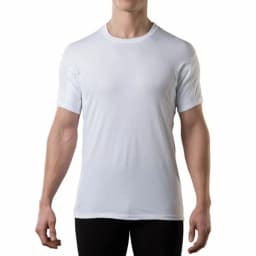
- Dress in layers starting with a sweat-proof undershirt — our Thompson Tee review explains how the waterproof underarm barrier stops sweat marks showing through
Throughout the Day
- Keep spare shirts or undershirts at work
- Use clinical-strength antiperspirant wipes for midday touch-ups
- Manage stress with breathing exercises before triggering situations
- Stay hydrated — dehydration does not reduce sweating but does increase odour
Evening Routine
- Shower and dry underarms thoroughly
- Wait 10-15 minutes for skin to cool completely
- Apply clinical-strength antiperspirant
- Do not apply deodorant on top of nighttime antiperspirant
Sources
- Strutton DR, et al. "US prevalence of hyperhidrosis and impact on individuals with axillary hyperhidrosis." Journal of the American Academy of Dermatology. 2004;51(2):241-248.
- Glaser DA, et al. "Topical glycopyrronium tosylate for the treatment of primary axillary hyperhidrosis: Results from the ATMOS-1 and ATMOS-2 phase 3 randomized controlled trials." Journal of the American Academy of Dermatology. 2019;80(1):128-138.
- Naumann M, Lowe NJ. "Botulinum toxin type A in treatment of bilateral primary axillary hyperhidrosis: Randomised, parallel group, double blind, placebo controlled trial." BMJ. 2001;323(7313):596-599.
- Hong HC, et al. "Microwave technology for treating axillary hyperhidrosis and bromhidrosis." Dermatologic Surgery. 2012;38(5):728-735.
- International Hyperhidrosis Society. "Treatments for Axillary Hyperhidrosis." SweatHelp.org.
- Nawrocki S, Cha J. "The etiology, diagnosis, and management of hyperhidrosis: A comprehensive review." Journal of the American Academy of Dermatology. 2019;81(3):657-666.