Understanding Why Your Hands Won't Stop Sweating
If you're searching for how to stop sweaty hands, you already know the frustration. Dropping your phone, avoiding handshakes, leaving damp marks on every surface you touch — palmar hyperhidrosis is common, though reliable UK-specific figures are not available, yet most people suffer in silence for years before seeking treatment.
This page is the practical sequence. Product buying lives on best treatments for sweaty hands. Causes, injection detail and surgery risk live on the palmar hyperhidrosis guide. If your feet drip as well, use sweaty hands and feet. Those three pages should not be read as three different rankings.
In the UK the order is a 20% pharmacy antiperspirant, then a GP, then iontophoresis if that medicine is not enough. A US lotion is not step one.
What Causes Sweaty Hands?
Palmar hyperhidrosis is a form of primary focal hyperhidrosis, meaning the excessive sweating is localized to a specific area (in this case, the palms) and is not caused by another medical condition. The eccrine sweat glands in your hands are overactivated by the sympathetic nervous system, often without any obvious trigger like heat or exercise.
Research published in the Journal of the American Academy of Dermatology suggests a strong genetic component — if one of your parents has hyperhidrosis, there is roughly a 25% chance you will develop it too. The condition typically begins in childhood or adolescence and can persist throughout life without treatment.
When Sweaty Hands Signal Something Else
In some cases, excessively sweaty palms can be a symptom of an underlying condition such as thyroid disorders, diabetes, menopause, or certain medications. If your sweating started suddenly in adulthood or is accompanied by other symptoms, it is important to rule out secondary causes with your doctor.
Home Remedies for Sweaty Hands
Before investing in medical treatments, many people find partial relief through accessible home strategies.
Antiperspirant Lotions and Creams
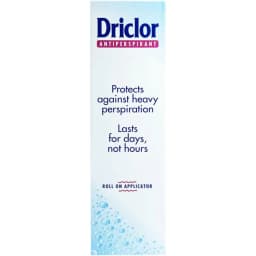
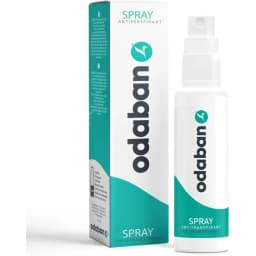
The first product is a 20% aluminium chloride hexahydrate pharmacy medicine, not a daytime lotion. Driclor and Anhydrol Forte are roll-ons. Odaban is a spray, which some people find easier on a palm. Apply to bone-dry skin at night and wash off in the morning. A pharmacist can sell them without a GP prescription.
Advertising disclosure: Driclor and Odaban links are Amazon UK and may earn a commission. Anhydrol Forte is a Chemist.net page, not an Associates link.
Driclor on Amazon UK → | Anhydrol Forte at a UK pharmacy → | Odaban on Amazon UK →
Which bottle to buy, and where Carpe and SweatBlock sit (imports, after the pharmacy step), is on best treatments for sweaty hands. Carpe vs SweatBlock is only useful if you are already comparing those two US products.
Sage Tea Soaks
Sage contains tannic acid, a natural astringent. Some people report mild improvement by soaking their hands in brewed sage tea for 20 minutes daily. While clinical evidence is limited, it is a low-risk option worth trying alongside other treatments.
Cornstarch and Baking Soda
A mixture of cornstarch and baking soda applied to the hands can absorb moisture temporarily. This is more of a quick-fix than a treatment, but it can help in situations where you need dry hands for a short period.
Over-the-Counter Products That Help
Beyond basic antiperspirants, several OTC products are specifically formulated for hand sweating:
- Antiperspirant hand lotions — Products like Carpe Antiperspirant Hand Lotion use aluminium sesquichlorohydrate in a non-greasy formula designed for daytime use.
- Grip-enhancing products — Originally designed for athletes, these can help with the functional problems caused by sweaty hands.
- Absorbent hand powders — Talc-free powders can provide temporary relief during the day.
Prescription Medications for Sweaty Hands
When OTC options fall short, several prescription treatments have strong evidence behind them.
Oral Anticholinergics
In the UK, propantheline is the oral medicine licensed for hyperhidrosis. Oxybutynin is often used off-label. Which drug, and the dose, is a prescriber's decision. Dry mouth and other anticholinergic effects are common. See prescription medicines and the NHS treatment guide.
Topical glycopyrronium
Qbrexza cloths are a US product. They are not licensed in the UK, so they are not the palm treatment to ask a GP for.
Iontophoresis, after a pharmacy medicine
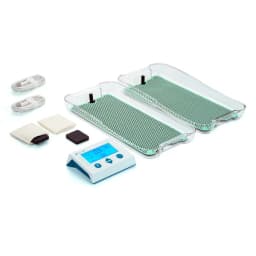
NICE's clinical knowledge summary treats iontophoresis as an option when aluminium chloride has failed or is unacceptable, especially for hands and feet. It is not a reason to skip the pharmacy step. The process places your hands in shallow trays of water while a device passes a mild current through the water.
What to Expect
- Initial phase: Daily 20-30 minute sessions for 1-2 weeks
- Maintenance phase: Sessions 1-3 times per week
- Success rate: Studies report good results for many people for palmar hyperhidrosis
- Downside: You need to maintain a regular schedule or sweating returns
Some NHS dermatology clinics offer iontophoresis. Access is local. A home device is the practical route when the clinic wait is long. How the sessions work is in iontophoresis and iontophoresis at home. Machines are compared on best iontophoresis machines. If your feet sweat as well, use sweaty hands and feet.
The same advertising disclosure applies. Dermadry Total →
Botox Injections for Sweaty Hands
Botulinum toxin injections are sometimes used for palms. In the UK they are rarely an NHS offer for hands. A US FDA licence covers severe underarm sweating, not a UK funding decision for palms. The procedure, pain and temporary weakness are on the palmar hyperhidrosis guide and the Botox page. Private costs are on the NHS treatment guide.
ETS surgery, last
Endoscopic thoracic sympathectomy can stop palmar sweating and it can cause compensatory sweating elsewhere. It is irreversible in the usual form. Read ETS surgery and compensatory sweating before treating a success percentage on another website as a reason to book it. It is not an early step.
Building Your Treatment Plan
The best approach is to start with the least invasive options and work your way up:
- Start here: Driclor, Anhydrol Forte or Odaban, at night, for several weeks.
- If that stings or fails: ask a pharmacist, then a GP. Do not swap straight to a weaker US lotion.
- Next device: iontophoresis, NHS clinic or a home machine. See best iontophoresis machines.
- GP medicines or, rarely, palm injections: NHS treatment guide.
- Surgery: only after the steps above. ETS.
A daytime lotion can sit alongside iontophoresis. It does not replace the 20% night-time product. The buying detail is on sweaty hands.
Sources
- Nawrocki S, Cha J. The etiology, diagnosis, and management of hyperhidrosis: A comprehensive review. Journal of the American Academy of Dermatology. 2019;81(3):657-666.
- Strutton DR, Kowalski JW, Glaser DA, Stang PE. US prevalence of hyperhidrosis and impact on individuals with axillary hyperhidrosis. Journal of the American Academy of Dermatology. 2004;51(2):241-248.
- International Hyperhidrosis Society. Iontophoresis Treatment for Excessive Sweating. SweatHelp.org.
- Eisenach JH, Atkinson JL, Fealey RD. Hyperhidrosis: evolving therapies for a well-established phenomenon. Mayo Clinic Proceedings. 2005;80(5):657-666.