What Is Palmar Hyperhidrosis?
This is the longer medical page for palmar hyperhidrosis: how severe it is, how iontophoresis and injections work, and why surgery is last. It is not a second product ranking. What to buy in the UK is best treatments for sweaty hands. The week-by-week sequence is how to stop sweaty hands. Both areas together are sweaty hands and feet.
In the UK, NICE's clinical knowledge summary still starts with a 20% aluminium chloride antiperspirant. Iontophoresis comes after that has failed or is unacceptable.
Advertising disclosure: buying links may earn a commission.
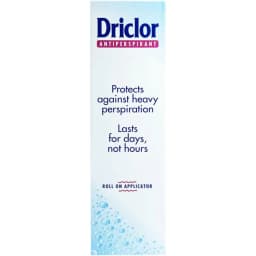
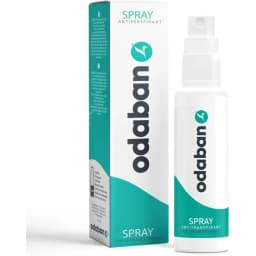
Driclor on Amazon UK → | Anhydrol Forte at a UK pharmacy → | Odaban on Amazon UK →
Palmar hyperhidrosis affects an estimated 1–3% of people globally, making it one of the most common forms of focal hyperhidrosis. The condition involves excessive sweating from the eccrine glands concentrated in the palms, often producing enough moisture to cause visible dripping in severe cases.
Unlike many other forms of hyperhidrosis, palmar sweating tends to begin very early — often in childhood. Research published in the Journal of the American Academy of Dermatology indicates that the average age of onset is around 13 years, though many patients report symptoms beginning before age 10. This early onset means that many people have lived with sweaty hands for decades before discovering effective treatments exist.
Understanding the Severity Scale
Palmar hyperhidrosis severity is typically classified into three levels:
- Mild: Palms are damp and clammy but not dripping. Sweating is noticeable but does not significantly impair grip or daily function
- Moderate: Palms produce visible beads of sweat. Paper becomes damp when touched. Handshakes are noticeably moist. Daily tasks are affected
- Severe: Palms drip sweat actively. Paper is soaked through. Electronic devices malfunction from moisture. Grip on objects is compromised. Social avoidance is common
Your severity level helps determine which treatments are most appropriate. Mild cases may respond well to topical treatments, while moderate to severe cases typically require iontophoresis, Botox, or systemic medications.
Iontophoresis after a 20% antiperspirant
Iontophoresis is the non-surgical option NICE describes when a 20% aluminium chloride product has not worked or cannot be used, especially for hands and feet. Response depends on the current, the schedule and whether the sessions continue. This page does not treat one percentage as a promise. A US FDA clearance on a home device is not an NHS approval.
How Iontophoresis Works
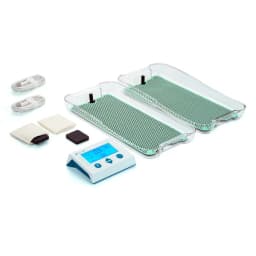
Iontophoresis involves submerging your hands in shallow trays of tap water while a medical device passes a mild electrical current through the water. The exact mechanism is not fully understood, but the leading theory is that the electrical current temporarily disrupts the ion channels in sweat gland cells, reducing their ability to produce sweat.
The Treatment Protocol
Initial phase (weeks 1-3):
- Treat 3-5 times per week
- Each session lasts 20-30 minutes
- Use tap water initially; if results are insufficient, your dermatologist may recommend adding glycopyrrolate to the water
Maintenance phase (ongoing):
- Once dryness is achieved, reduce to 1-3 sessions per week
- Many patients find that 1-2 weekly sessions maintain excellent results
- Some patients can eventually reduce to once every 1-2 weeks
Choosing an Iontophoresis Machine
Several devices are available for home use, each with different features and price points:
Dermadry Total is one of the most popular consumer-grade iontophoresis devices. It comes with trays for both hands and feet, features adjustable current levels, and is priced accessibly compared to medical-grade units. Read our detailed Dermadry Total review for a thorough evaluation.
Fischer MD-1a is a medical-grade device considered the industry standard by many dermatologists. It offers higher maximum current and more precise control but comes at a significantly higher price point.
RA Fischer devices and Hidrex are other reputable options used in clinical settings.
For a complete comparison, visit our guide to the best iontophoresis machines and our comprehensive iontophoresis treatment overview.
Tips for Iontophoresis Success
- Consistency is critical — irregular treatment is the number one reason iontophoresis "fails"
- Increase current gradually — start at the lowest setting and increase by small increments each session until you find your effective level
- If tap water alone is insufficient, ask your dermatologist about adding glycopyrrolate or aluminium chloride to the water
- Treat any cuts or abrasions — apply petroleum jelly over cuts before treatment to prevent stinging
- Be patient — it typically takes 6-10 sessions before significant dryness is achieved
Botox for Palmar Hyperhidrosis
Botulinum toxin blocks acetylcholine so the nerve signal does not reach the sweat gland. US regulators licensed it for severe underarm sweating. Palm use is a separate, off-label practice, and in the UK it is rarely funded. Funding and private costs are on the NHS treatment guide.
Effectiveness
Trials report a substantial reduction in palmar sweating after treatment. A study in the Archives of Dermatology found that the median duration of effect was approximately 6 months, with some patients experiencing benefits for up to 12 months.
The Procedure
Palmar Botox requires more injections than underarm Botox because of the high density of sweat glands in the palms. A typical treatment involves:
- 50-100 units per palm (100-200 units total)
- 15-30 injection points per palm, spaced 1-1.5 cm apart
- Treatment duration: 30-45 minutes
Pain Management
The palms are densely innervated and significantly more sensitive than the underarms. Pain management is essential:
- Nerve blocks: A wrist block (median and ulnar nerve block) provides anaesthesia and is the approach many clinics use
- Ice or vibration: Cold packs applied before and during injection can reduce discomfort
- Topical anesthetics: EMLA cream or lidocaine gel applied under occlusion for 60 minutes before treatment
- Nitrous oxide: Some practitioners offer nitrous oxide (laughing gas) during the procedure
Side Effects and Considerations
The main side effect specific to palmar Botox is temporary hand weakness. Because the toxin can affect nearby muscles in the hand, some patients experience reduced grip strength or difficulty with fine motor tasks for 1-3 weeks after treatment. This effect is usually mild and resolves completely, but it is an important consideration for musicians, surgeons, athletes, and others who rely on hand dexterity.
Learn more in our Botox for sweating treatment guide.
Oral Medications
Systemic anticholinergic medications can reduce palmar sweating as part of an overall reduction in body-wide perspiration.
In the UK, propantheline is the oral medicine licensed for hyperhidrosis. Oxybutynin is often used off-label. Oral glycopyrronium is a different conversation and is not the default first tablet. The dose is a prescriber's decision. This page does not set one. See prescription medicines and oxybutynin for sweating.
Side Effects of Oral Anticholinergics
All anticholinergic medications share a common side effect profile:
- Dry mouth (most common, affecting 40-70% of patients)
- Constipation
- Blurred vision
- Urinary retention
- Heat intolerance due to reduced total body sweating
- Cognitive effects (particularly concerning in older adults)
Strategies to manage dry mouth include sugar-free sweets, frequent water sipping, and oral moisturising rinses. Taking medication with food can reduce some gastrointestinal side effects.
Topical Treatments
Aluminium Chloride Antiperspirants
In the UK this is the first treatment, including for dripping palms: 20% aluminium chloride hexahydrate at bedtime. Palms are harder than underarms because the skin is thicker and the hands get washed, so the result is often more modest. That is a reason to use the product correctly, not a reason to start with a gadget. Driclor, Anhydrol Forte and Odaban are the pharmacy products. Buying detail is on sweaty hands.
Application tips for palms:
- Apply to completely dry palms at bedtime
- Consider wearing thin cotton gloves over the treated palms to enhance absorption
- Wash off in the morning
- Expect modest improvement — antiperspirants alone rarely control moderate to severe palmar hyperhidrosis
Topical Glycopyrrolate
Compounded glycopyrrolate for palms is a specialist conversation, not a pharmacy product, and Qbrexza cloths are not licensed in the UK. Do not treat a percentage you have seen on a US site as a UK dose.
Endoscopic Thoracic Sympathectomy (ETS)
ETS is the only treatment that can permanently stop palmar sweating. It is irreversible, and it trades one problem for a risk of another — see compensatory sweating. It involves surgically interrupting the sympathetic nerve chain (T2-T4 level) that controls hand sweating.
Effectiveness
ETS is remarkably effective at stopping palmar sweating — success rates exceed 95% for complete cessation of hand perspiration. Results are immediate and permanent in the vast majority of cases.
The Serious Trade-Off: Compensatory Sweating
The critical consideration with ETS is compensatory sweating — excessive sweating that develops in other body areas after surgery. This occurs in around 60% of patients (pooled estimate 62%, 95% CI 51–72%).
Compensatory sweating most commonly affects:
- The back and trunk
- The chest and abdomen
- The groin and thighs
- The feet
In some patients, compensatory sweating is mild and manageable. In others, it can be severe enough to be more debilitating than the original palmar hyperhidrosis. This risk is irreversible — clamping (as opposed to cutting) the nerve provides slightly higher potential for reversal, but reversal is not guaranteed.
Who Should Consider ETS?
ETS is generally recommended only for patients who:
- Have severe palmar hyperhidrosis (Grade 3 — dripping)
- Have exhausted all other treatment options (iontophoresis, Botox, medications)
- Fully understand and accept the risk of compensatory sweating
- Have been counselled by a surgeon experienced in sympathectomy for hyperhidrosis
- Are not relying on hand dexterity for their profession (to avoid the temporary post-surgical weakness period)
Finding a Surgeon
Choose a thoracic surgeon who has performed a high volume of ETS procedures specifically for hyperhidrosis. Ask about their personal compensatory sweating rates, their preferred technique (clamping vs. cutting), and whether they offer pre-surgical counseling about realistic expectations.
Daily Management Strategies
Products and Tools
- Pharmacy antiperspirant at night: Driclor, Anhydrol Forte or Odaban. A US lotion such as Carpe is an optional daytime import, not the treatment.
- Grip-enhancing chalk or powder: Originally designed for rock climbing and gymnastics, liquid chalk can help maintain grip during sports and daily activities
- Absorbent wipes: Keep tissues or absorbent wipes in your pocket for quick hand drying before handshakes
- Touchscreen-compatible gloves: For managing electronics in cold weather without moisture issues
Social Strategies
- The confident handshake: Dry your palm on your trouser leg immediately before you offer your hand. A brief handshake is more practical than avoiding people.
- Prepare in advance: Before meetings, presentations, or social events, take your medication, apply topical products, and have tissues accessible
- Disclosure: Many people find that briefly acknowledging their condition ("I have a medical condition that makes my hands sweat — don't worry, it is not contagious") reduces anxiety and breaks the cycle of sweat-triggering stress
Work and School
- Use pen grips or rubberized pens that maintain traction on damp hands
- Place a cloth or paper towel under your writing hand to absorb moisture and protect paper
- Consider a keyboard cover for your computer to protect electronics
- Keep a small hand towel at your workspace
Exercise and Sports
- Use gym chalk or liquid grip products for weight training
- Wear moisture-wicking gloves for cycling or rowing
- Tennis and racquet sport grips can be wrapped with absorbent overgrips
- Consider sports that are less affected by hand moisture (running, swimming, cycling)
Sources
- Nawrocki S, Cha J. "The etiology, diagnosis, and management of hyperhidrosis: A comprehensive review." Journal of the American Academy of Dermatology. 2019;81(3):657-666.
- Lowe NJ, et al. "Botulinum toxin type A in the treatment of primary axillary hyperhidrosis: A 52-week multicenter double-blind, randomized, placebo-controlled study of efficacy and safety." Journal of the American Academy of Dermatology. 2007;56(4):604-611.
- Pariser DM, et al. "Topical glycopyrronium tosylate for the treatment of primary axillary hyperhidrosis: Patient-reported outcomes from the ATMOS-1 and ATMOS-2 trials." American Journal of Clinical Dermatology. 2019;20(1):135-145.
- Solish N, et al. "A comprehensive approach to the recognition, diagnosis, and severity-based treatment of focal hyperhidrosis: Recommendations of the Canadian Hyperhidrosis Advisory Committee." Dermatologic Surgery. 2007;33(8):908-923.
- Hashmonai M, et al. "The etiology of upper limb hyperhidrosis." Clinical Autonomic Research. 2000;10(6):415-418.
- International Hyperhidrosis Society. "Iontophoresis for Hyperhidrosis." SweatHelp.org.
- Dermadry. "How Iontophoresis Works." Dermadry.com.