The Professional's Guide to Managing Sweaty Hands
If sweaty hands at work keep you up at night with dread, you are far from alone. The fear of a clammy handshake, a smudged presentation, or visible palm sweat during a meeting is one of the most commonly reported concerns among professionals with hyperhidrosis. And the cruel irony is that the anxiety about sweating in these situations often makes the sweating worse.
This guide is not about curing your hyperhidrosis (though we link to resources for that). This is about practical, actionable strategies for navigating the professional world with confidence — starting today.
Quick Fixes Before High-Stakes Moments
The 30-Second Handshake Prep
When you know a handshake is imminent — walking into an interview, approaching a networking event, greeting a client:
- Wipe your hands discreetly on a tissue, handkerchief, or the inside of your jacket
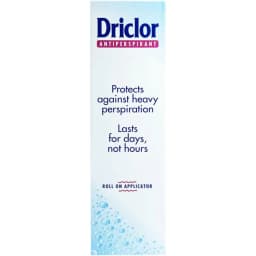
- Apply a quick-drying hand antiperspirant if you have one
- Hold something cold — a cold water bottle or glass held in your dominant hand for 30-60 seconds constricts blood vessels and temporarily reduces palm sweating
- Dry your hands on your pants/skirt right before the handshake — pick a dark, textured fabric area where moisture will not show
The Tissue Trick
Keep a folded tissue in your pocket. Just before a handshake, casually reach into your pocket (as if adjusting your phone or grabbing a business card) and squeeze the tissue to absorb moisture. This takes 2 seconds and nobody notices.
The Cold Compress Hack
Before an interview or presentation, hold a cold beverage or ice pack for 1-2 minutes. Cold constricts blood vessels, reduces blood flow to the hands, and temporarily slows sweat production. Excuse yourself to the restroom and run cold water over your wrists and palms for the same effect.
Job Interview Strategies
Before the Interview
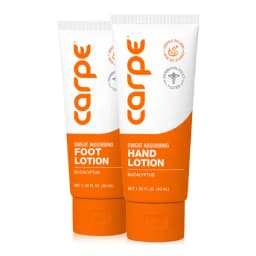
- Apply hand antiperspirant 30-60 minutes before arrival. Products like Carpe Antiperspirant Hand Lotion dry clear and non-greasy.
- Bring a cold water bottle to hold in the car or waiting area
- Carry a small towel or large handkerchief in your bag for last-minute drying
- Avoid caffeine in the hours before the interview — it stimulates the sympathetic nervous system and worsens sweating
- Eat a light, non-spicy meal — heavy or triggering foods can increase sweating
- Arrive early to give yourself time to cool down from travel and nerves
The Handshake Moment
- Offer a confident, firm handshake regardless of moisture. A hesitant, limp handshake is noticed far more than slight dampness.
- If your hands are damp, a brief, honest comment like "Apologies, warm hands today" is perfectly acceptable and defuses any awkwardness instantly. Most people will not even register it.
- Do not avoid the handshake. Refusing to shake hands is far more memorable (and negatively perceived) than a slightly moist palm.
- Consider the elbow bump or wave — post-pandemic, alternative greetings have become much more socially accepted.
During the Interview
- Rest your hands on your lap or the table naturally — avoid clenching or hiding them
- If writing, use a pen with a rubberized grip
- Keep a notepad on the table — it gives you a surface to rest your hands on and absorb some moisture
- If offered water, accept it — holding the cold glass helps, and sipping gives you natural hand-drying opportunities
Presentation and Meeting Tips
Managing Sweat During Presentations
- Use a clicker/remote rather than holding paper notes. If you must use notes, print them on card stock or laminate them — paper becomes transparent and fragile when wet.
- Keep a podium cloth or towel tucked discreetly nearby
- Avoid touching the screen if using a whiteboard or touch display — use a stylus or laser pointer
- Practice grounding techniques — press your feet firmly into the floor, focus on your breathing, and remember that the audience cares about your content, not your hands
Daily Office Life
- Keyboard and mouse: Keep a microfiber cloth at your desk to wipe surfaces. Consider a mouse pad with a cloth surface and a keyboard with a matte finish. Some people keep a spare keyboard cover.
- Paper handling: Handle important documents with care. Consider scanning and going digital when possible. If you must handle paper, keep hands dry with a cloth or use a light application of hand antiperspirant.
- Phone and touchscreens: Screen protectors designed for matte/anti-fingerprint can help. Wipe your phone regularly with a microfiber cloth.
- Shared equipment: Wipe down conference phones, shared mice, and other communal items after use — this is both considerate and reduces self-consciousness.
Long-Term Solutions for Working Professionals
While quick fixes help in the moment, investing in longer-term treatment means fewer daily battles.
Antiperspirant Hand Lotions
Daily use of hand antiperspirant lotions can reduce baseline sweating over time. Apply in the morning and reapply as needed. Most formulas dry clear and non-greasy, so they are workplace-appropriate. Browse options in our best antiperspirants guide.
Iontophoresis
For the most reliable long-term results, iontophoresis is the gold standard for palmar hyperhidrosis. Home devices can be used before or after work — 20-30 minute sessions that maintain dry hands for days at a time once you reach maintenance phase. Many professionals describe iontophoresis as "life-changing" for their careers.
Oral Medications
Anticholinergic medications like glycopyrrolate can be taken daily or strategically before big events. Many professionals keep a prescription for situations where they need the best chance of staying dry. The medication takes effect within 1-2 hours, though side effects like dry mouth are a consideration.
Botox
Botox injections in the palms can provide 3-6 months of significantly reduced sweating. Some professionals schedule treatments before busy seasons or important project phases.
Should You Tell Your Employer?
This is a deeply personal decision. Some considerations:
Reasons to Disclose
- Accommodations — Some workplaces can provide accommodations (digital-only workflows, temperature-controlled offices, flexible presentation formats)
- Reduced anxiety — Not hiding a medical condition lifts a significant psychological burden
- Legal protection — Hyperhidrosis is a recognized medical condition; disclosure can protect you from discrimination
- Normalizing the conversation — Your openness may help colleagues who share the condition
Reasons to Keep It Private
- It is your right — You are under no obligation to disclose medical conditions that do not affect safety
- Potential bias — Unfortunately, not all workplaces are understanding
- It may not be relevant — If your treatment manages symptoms effectively, disclosure may be unnecessary
If you do disclose, keep it simple and factual: "I have a medical condition called hyperhidrosis that causes my hands to sweat more than normal. It does not affect my work, but I wanted you to be aware."
Mindset Shifts That Help
People Notice Less Than You Think
Research on the "spotlight effect" — published in the Journal of Personality and Social Psychology — demonstrates that people consistently overestimate how much others notice their appearance and behaviours. Your sweaty hands are far more apparent to you than to anyone else in the room.
Competence Trumps Comfort
Your professional value is determined by your skills, ideas, and work product — not the moisture level of your palms. Every minute spent worrying about sweat is a minute not spent focusing on delivering excellent work. This is not toxic positivity; it is a practical truth that shifts where you direct your energy.
You Are in Good Company
Hyperhidrosis affects around 1% of the UK population, and millions more worldwide. Many successful professionals, executives, physicians, lawyers, teachers, and public speakers live with this condition. You are not uniquely disadvantaged — you are part of a large, typically silent, community.
Sources
- Strutton DR, Kowalski JW, Glaser DA, Stang PE. US prevalence of hyperhidrosis and impact on individuals with axillary hyperhidrosis. Journal of the American Academy of Dermatology. 2004;51(2):241-248.
- Gilovich T, Medvec VH, Savitsky K. The spotlight effect in social judgment. Journal of Personality and Social Psychology. 2000;78(2):211-222.
- International Hyperhidrosis Society. Living and Working with Hyperhidrosis. SweatHelp.org.
- Nawrocki S, Cha J. The etiology, diagnosis, and management of hyperhidrosis: A comprehensive review. Journal of the American Academy of Dermatology. 2019;81(3):657-666.