Why Nervous Sweating Is Different (and Harder to Manage)
If you have ever walked into a job interview, stood up to give a presentation, or entered a crowded room and immediately felt sweat pooling under your arms, you know what nervous sweating feels like. Finding the best deodorant for nervous sweating starts with understanding why stress sweat is fundamentally different from the sweat you produce during exercise or on a hot day.
Stress sweat is smellier, happens faster, and often feels impossible to control. But with the right products and strategies, you can manage it effectively.
Stress Sweat vs. Thermoregulatory Sweat
Your body has two types of sweat glands that produce distinctly different kinds of sweat:
Eccrine Glands (Regular Sweat)
- Found all over the body (about 2-4 million total)
- Activated primarily by heat and exercise
- Produce clear, odourless sweat that is mostly water and salt
- Purpose: cooling the body
Apocrine Glands (Stress Sweat)
- Concentrated in the armpits, groin, and scalp
- Activated by emotional stress, anxiety, and adrenaline
- Produce a thicker, milky sweat containing proteins, lipids, and steroids
- Bacteria on the skin break down these compounds, producing the characteristic strong odour of "stress sweat"
- Purpose: believed to be an evolutionary signaling mechanism
This is why a 30-minute run might leave you damp but relatively fresh-smelling, while a 10-minute anxiety attack can leave you with noticeable body odour. The chemical composition is completely different.
What to Look for in a Nervous Sweating Product
The best deodorant for nervous sweating needs to address two problems simultaneously: the volume of sweat and the odour. Here is what to prioritize:
Antiperspirant (Not Just Deodorant)
This distinction matters enormously. Deodorant masks or prevents odour but does nothing to reduce sweat output. Antiperspirant contains aluminium-based compounds that physically block sweat ducts. For nervous sweating, you need an antiperspirant at minimum — ideally a clinical-strength one.
Key Ingredients to Look For
- Aluminium chloride — The most effective antiperspirant ingredient. Found in prescription-strength products at 12-20% concentration.
- Aluminium zirconium tetrachlorohydrex gly — The most common ingredient in clinical-strength OTC antiperspirants. Effective and generally well-tolerated.
- Aluminium chlorohydrate — Found in regular-strength antiperspirants. Good for mild sweating.
Odour-Fighting Compounds
Since stress sweat is particularly odour-prone, look for products that also contain:
- Zinc compounds (zinc ricinoleate, zinc oxide) — neutralize odour-causing bacteria
- Baking soda — absorbs moisture and neutralizes odour
- Activated charcoal — absorbs moisture and traps odour molecules
- Antibacterial agents — reduce the bacteria responsible for breaking down apocrine sweat
Product Recommendations by Severity
For Mild Nervous Sweating
If your stress sweating is occasional and moderate, a clinical-strength OTC antiperspirant/deodorant combination is usually sufficient:
- Apply the night before anticipated stressful events (this gives the aluminium time to form effective plugs in sweat ducts)
- Reapply in the morning for added protection
- Look for "48-hour" or "clinical strength" labeling, and check the Drug Facts panel: our guide to drugstore clinical strength deodorants shows what each label actually contains
For Moderate Nervous Sweating
Step up to products specifically formulated for heavy sweating:
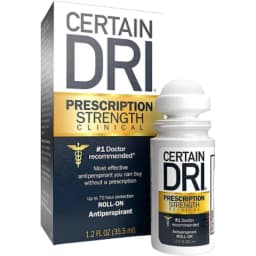
- Aluminium chloride-based roll-ons (such as Certain Dri Prescription Strength) applied at bedtime
- Pair with a regular deodorant in the morning for odour protection
- Consider antiperspirant wipes for convenient touch-ups throughout the day
For Severe Nervous Sweating
When standard products are not enough, consider these approaches:
- Prescription-strength aluminium chloride hexahydrate (15-20%) — applied at night under occlusion
- Topical anticholinergic wipes (Qbrexza) — specifically designed for axillary hyperhidrosis
- Layering strategies — antiperspirant at night, deodorant in the morning, with absorbent undershirts
For detailed product comparisons and reviews, visit our comprehensive guide to the best antiperspirants for hyperhidrosis.
Application Techniques That Matter
How you apply your antiperspirant is almost as important as which product you use:
The Nighttime Rule
Apply antiperspirant at bedtime, not in the morning. At night, your sweat glands are less active, allowing the aluminium compounds to fully penetrate and block the sweat ducts. By morning, the plugs are in place and will remain effective even after showering.
The Dry Skin Rule
Never apply antiperspirant to damp or sweaty skin. The aluminium needs to interact with dry sweat ducts to form effective plugs. After showering, dry your underarms thoroughly (a hairdryer on cool can help) and wait a few minutes before applying.
The Layering Technique
For maximum protection on high-stress days:
- Apply clinical-strength antiperspirant at bedtime
- In the morning, shower normally (the antiperspirant plugs remain in the ducts)
- Apply a separate deodorant for odour protection
- Carry antiperspirant wipes or travel-size products for midday touch-ups
Beyond Products: Managing Nervous Sweating
While the right deodorant helps, addressing the root cause of nervous sweating — the anxiety itself — provides the most meaningful relief.
Quick Fixes Before Stressful Events
- Cold water on wrists — Cooling the pulse points in your wrists can lower overall body temperature and reduce sweating
- Controlled breathing — 4-7-8 breathing (inhale 4 counts, hold 7, exhale 8) activates the parasympathetic nervous system
- Dress strategically — Wear breathable fabrics, avoid synthetic materials, and choose dark colours or patterns that hide sweat marks
- Sweat-proof undershirts — Products like Thompson Tees have built-in sweat barriers that prevent underarm stains from reaching outer clothing
Long-Term Strategies
- Cognitive behavioural therapy — Highly effective for reducing anxiety-driven sweating
- Regular exercise — Improves overall stress tolerance and sympathetic nervous system regulation
- Stress management practices — Meditation, yoga, progressive muscle relaxation
- Medication — Beta-blockers (like propranolol) can be taken situationally before high-stress events to reduce physical anxiety symptoms including sweating
The Role of Clothing
Your clothing choices can make nervous sweating more or less visible and manageable:
- Wear sweat-proof undershirts under dress shirts
- Choose breathable fabrics — cotton, linen, and moisture-wicking performance fabrics
- Avoid: polyester, nylon, and silk (which show sweat marks and trap heat)
- Colour strategy: Dark colours, patterns, and prints hide sweat marks far better than solid light colours
- Keep a spare shirt at work for emergencies
Sources
- Wilke K, Martin A, Terstegen L, Biel SS. A short history of sweat gland biology. International Journal of Cosmetic Science. 2007;29(3):169-179.
- International Hyperhidrosis Society. Antiperspirants and Deodorants 101. SweatHelp.org.
- Heckmann M, Ceballos-Baumann AO, Plewig G. Botulinum toxin A for axillary hyperhidrosis. New England Journal of Medicine. 2001;344(7):488-493.
- Nawrocki S, Cha J. The etiology, diagnosis, and management of hyperhidrosis: A comprehensive review. Journal of the American Academy of Dermatology. 2019;81(3):657-666.
Related reading
- Antiperspirant vs deodorant — the difference matters more than the brand
- Hyperhidrosis and anxiety — breaking the sweat–anxiety cycle
- Certain Dri review — the budget clinical option