Dermadry vs RA Fischer: Which Iontophoresis Machine Is Better?
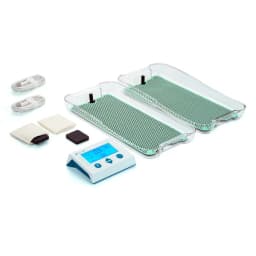
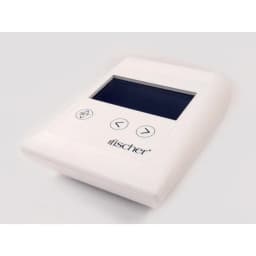
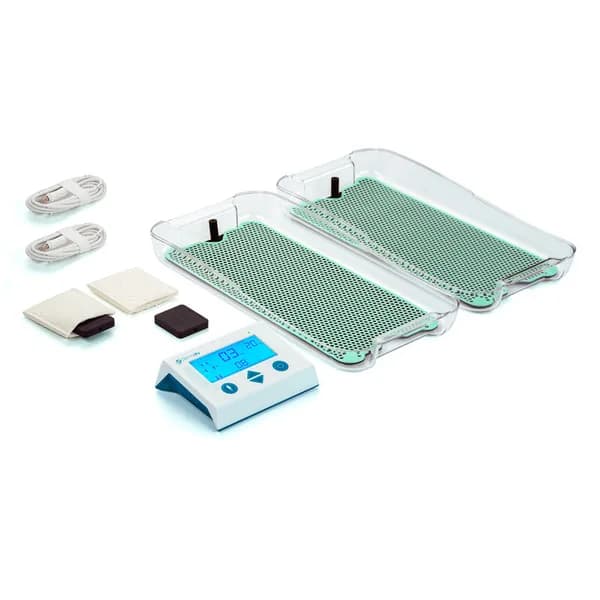
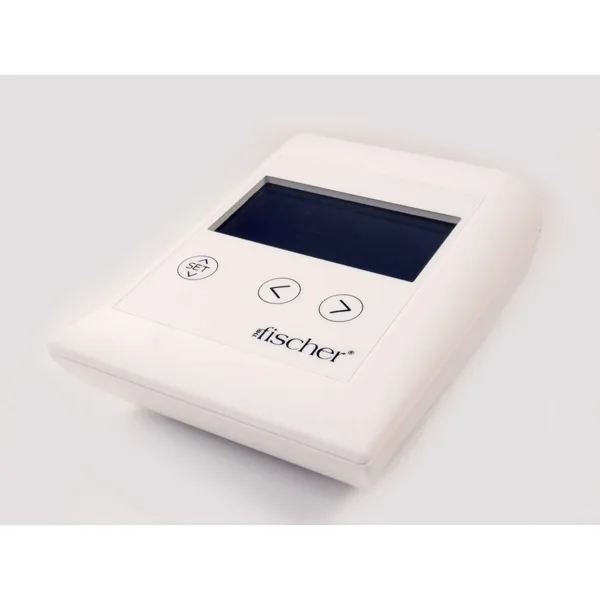
The Dermadry Total and RA Fischer MD-1a are the two most popular home iontophoresis machines for treating hyperhidrosis. They solve the same problem — excessive sweating of the hands, feet, and underarms — but take meaningfully different approaches in technology, design, and price.
This comparison breaks down every factor that matters to help you make the right choice.
Disclosure: This site earns affiliate commissions from qualifying purchases. This does not affect our editorial independence or product rankings.
Head-to-Head Comparison
| Category | Dermadry Total | RA Fischer MD-1a |
|---|---|---|
| Price | $500 (about £372) | $750-$1,075 (about £558–800) |
| Current type | Pulsed DC | Direct DC |
| Max current | 25 mA | 30 mA |
| Treatment areas | Hands, feet, underarms | Hands, feet, underarms |
| FDA cleared | Yes | Yes |
| Comfort level | More comfortable | Less comfortable |
| Ease of use | Beginner-friendly (app) | Steeper learning curve |
| Build quality | Consumer-grade (solid) | Medical-grade |
| Design | Modern, compact | Clinical, larger |
| Warranty | Standard | Limited lifetime |
| Insurance coverage | Less common | More commonly covered |
| Made in | Canada | USA |
| Our rating | 9.2/10 | 8.8/10 |
Price: Dermadry Wins
This is the most significant difference. The Dermadry Total costs $500 (about £372); the RA Fischer starts at $750 (about £558) for the underarm-only model and reaches $1,075 (about £800) for the 3-in-1 that covers the same areas as the Dermadry. Compared like for like that is a $575 (about £428) gap.
For most people with moderate hyperhidrosis, both devices produce comparable results. Paying more than double for a marginal improvement in effectiveness is difficult to justify — unless insurance covers the MD-1a (more on that below).
The exception: If your insurance covers durable medical equipment for hyperhidrosis, the RA Fischer is more likely to be approved in the US. UK buyers import both devices and pay the full retail price plus any import charges.
Winner: Dermadry Total (unless insurance covers the MD-1a)
Current Technology: Depends on Your Needs
Dermadry: Pulsed DC
Pulsed direct current delivers the electrical current in brief pulses rather than continuously. This produces a milder sensation, reduces skin irritation, and is generally more comfortable — especially during the initial treatment phase when you are finding your ideal settings.
RA Fischer: Direct DC
Continuous direct current provides a steady, uninterrupted flow. Some dermatologists and clinical studies suggest this may be more effective at blocking sweat glands, particularly for severe or treatment-resistant cases. However, the evidence is not conclusive enough to declare direct DC definitively superior.
What the Research Says
A 2004 study by Dolianitis et al. compared pulsed and direct current iontophoresis and found both effective, with direct current showing a slight edge in initial response time. However, long-term maintenance results were comparable between the two approaches.
The practical takeaway: pulsed DC (Dermadry) works for most people. Direct DC (RA Fischer) may provide an advantage for severe cases, but the difference is not dramatic.
Winner: RA Fischer for severe cases; Dermadry for everyone else
Comfort: Dermadry Wins
This is not close. Pulsed DC is meaningfully more comfortable than direct DC:
- Dermadry (pulsed): Mild tingling that most users adapt to quickly. Rarely described as unpleasant, even at higher settings.
- RA Fischer (direct): Stronger, continuous tingling that can approach discomfort at higher current levels. Takes more sessions to get used to.
If you have sensitive skin, low pain tolerance, or are new to iontophoresis, the Dermadry's comfort advantage is a significant factor. You are more likely to stick with treatment if the sessions are tolerable.
Winner: Dermadry Total (clearly)
Effectiveness: Close, with an Edge to RA Fischer for Severe Cases
Both devices provide excellent sweat reduction for the majority of users:
| Metric | Dermadry Total | RA Fischer MD-1a |
|---|---|---|
| Hands reduction | substantial | substantial |
| Feet reduction | Marked | substantial |
| Time to initial results | 2-4 weeks | 2-3 weeks |
| Time to optimal results | 6-8 weeks | 5-7 weeks |
| Maintenance frequency | 1-3x/week | 1-3x/week |
The RA Fischer shows a marginal edge — approximately 5-10% better reduction and slightly faster initial response. This difference is most meaningful for severe cases where every percentage point counts.
For moderate hyperhidrosis, both devices achieve results that are functionally equivalent. You would not notice a real-world difference between 75% and 80% sweat reduction.
Winner: RA Fischer MD-1a (slight edge, most meaningful for severe cases)
Ease of Use: Dermadry Wins
The Dermadry Total was designed as a consumer product, and it shows:
- Companion app with step-by-step treatment guidance
- Clean, intuitive interface on the device itself
- Clear visual instructions in the packaging
- Pre-set treatment programs for different body areas
- Responsive customer support via email and chat
The RA Fischer MD-1a was designed as a medical device:
- Manual controls — a dial and basic display
- Paper instruction manual — adequate but not engaging
- No app or digital guidance
- More trial and error during initial setup
- Phone-based customer support — helpful but less immediate
If you have never done iontophoresis before, the Dermadry will get you up and running faster with less frustration. If you are comfortable with medical equipment and do not need hand-holding, the MD-1a's simplicity is actually a strength — fewer things to break.
Winner: Dermadry Total
Build Quality and Durability: RA Fischer Wins
The RA Fischer MD-1a is built to medical-device standards:
- Heavier, more robust construction
- Aluminium electrode trays (vs. Dermadry's silicone)
- Limited lifetime warranty
- Designed to last 10+ years
- Used in clinical settings that demand reliability
The Dermadry Total is well-built for a consumer device:
- Compact and lightweight
- Silicone trays (functional, less robust than aluminium)
- Standard warranty
- Expected lifespan of 3-5+ years
- Designed for home use
If you plan to use your iontophoresis device for the next decade, the MD-1a's build quality is reassuring. If you are comfortable replacing a device every 3-5 years (and technology may improve), the Dermadry's construction is perfectly adequate.
Winner: RA Fischer MD-1a
Customer Support: Dermadry Wins
Dermadry has invested heavily in customer support:
- Email and chat support with quick response times
- Active social media presence
- Companion app with treatment tracking
- Online knowledge base with troubleshooting guides
- Community of users sharing tips
RA Fischer provides solid but more traditional support:
- Phone-based support during business hours
- Knowledgeable team with deep product expertise
- Less online presence and community resources
For first-time iontophoresis users who may have questions during the initial treatment phase, Dermadry's more accessible support is a meaningful advantage.
Winner: Dermadry Total
Insurance Coverage: RA Fischer Wins
The RA Fischer MD-1a has a significant advantage for insurance reimbursement:
- Longer history of dermatologist prescriptions
- Medical-grade classification
- RA Fischer's team actively helps with insurance paperwork
- More commonly recognized by insurance companies as a covered DME
Dermadry is also eligible for insurance coverage but is less commonly prescribed through traditional dermatology channels.
If your insurance covers the MD-1a, the entire price comparison changes for US buyers. A $50 (about £37) DME copay makes the MD-1a the obvious choice over the $500 (about £372) Dermadry.
Winner: RA Fischer MD-1a
Our Verdict
Choose Dermadry Total if:
- You have mild to moderate hyperhidrosis
- Budget matters (you are paying out of pocket)
- Comfort during treatment is important
- You are new to iontophoresis and want a guided experience
- You want a compact, modern device
Choose RA Fischer MD-1a if:
- You have severe or treatment-resistant hyperhidrosis
- Insurance covers the device (making price irrelevant)
- Your dermatologist specifically recommends direct DC
- You want medical-grade durability and a lifetime warranty
- You have tried pulsed DC without adequate results
For Most People
The Dermadry Total is the better choice for the majority of hyperhidrosis sufferers. It costs less than half the price, is more comfortable to use, delivers comparable results for moderate cases, and provides a better overall user experience.
The RA Fischer MD-1a remains the premium option for severe cases and insurance-covered purchases. If budget is not a constraint (or insurance removes it), the MD-1a's medical-grade build and slightly stronger treatment capability make it a worthy investment.
Our recommendation: Start with the Dermadry Total. If after 8-12 weeks of consistent treatment you are not achieving adequate results, then consider upgrading to the RA Fischer MD-1a.
Buy Dermadry Total → | Buy RA Fischer MD-1a →
FAQ
Can I try one and switch to the other?
Yes. Iontophoresis technique is transferable between devices. If you start with Dermadry and later upgrade to the RA Fischer, you can apply everything you learned about treatment timing, intensity, and maintenance scheduling.
Do dermatologists prefer one over the other?
Many dermatologists default to prescribing the RA Fischer because it has a longer clinical track record. However, an increasing number now recommend the Dermadry Total, especially for patients paying out of pocket. Ask your dermatologist which they recommend for your specific case.
Can I use both devices?
There is no benefit to using both simultaneously. They perform the same function — you only need one iontophoresis device. Choose the one that best fits your severity, budget, and comfort preferences.
Which has better resale value?
The RA Fischer MD-1a holds its value better on the secondary market, likely due to the higher retail price and medical-grade perception. However, buying a used iontophoresis device carries hygiene and warranty concerns — we recommend buying new.
Sources
- Dermadry — Product specifications and clinical data
- RA Fischer Co. — MD-1a technical specifications
- Dolianitis C, et al. "A comparison of pulsed and direct iontophoresis." Australasian Journal of Dermatology. 2004;45(2):140-141.
- International Hyperhidrosis Society — Iontophoresis device comparison guidelines